
ABB 2TFB100141R1001 T5S MCCB Breaker - RHE/W
Part Number: 2TFB100141R1001
Quick Summary
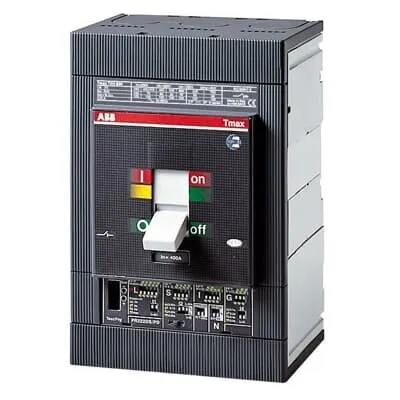
ABB 2TFB100141R1001 T5S MCCB protects electrical networks in industrial automation applications. Engineers often struggle to balance protection accuracy, diagnostic visibility, and quick installation in tight panels. This model enhances selectivity and trip reliability while minimizing nuisance tripping through precise curve coordination, idle time reduction, and robust thermal performance. RoHS compliance, CMRT reporting, and WEEE guidance help maintenance teams meet regulatory obligations without sacrificing uptime. Additionally, integration with ABB EcoSolutions simplifies lifecycle management, while compatibility with external accessories supports scalable installations. For project teams, that translates to reduced panel space, faster commissioning, and a tangible reduction in total cost of ownership over the equipment lifecycle.
Product Information
Environmental Product Declaration - EPD
NoDecNee
REACH Declaration
REACh Declaration ABB Sace circuit breakers
RoHS Information
RoHS Declaration ABB Sace circuit breakers
RoHS Status
Following EU Directive 2011/65/EU and Amendment 2015/863 July 22, 2019
Conflict Minerals Reporting Template (CMRT)
CMRT - Conflict Minerals Reporting Template
Environmental Information
Product Environmental Information Tmax T5 | Breakers - Packaging disposal information
Customs Tariff Number
853620
Data Sheet, Technical Information
SACE Tmax. T Generation. Low voltage moulded-case circuit-breakers from 250 A up to 1600 A
WEEE Category
5. Small Equipment (No External Dimension More Than 50 cm)
T5S Tmax MCCB capability delivers precise overcurrent protection and selective trip coordination, reducing nuisance trips and safeguarding motors and drives. This translates to higher uptime and lower maintenance costs in heavy-usage panels such as packaging lines and process cells. In new builds and modernization projects, the compact Tmax MCCB fits tight control cabinets while delivering reliable protection for critical loads. This reliability translates into fewer field calls and smoother audits during panel handovers. RoHS declaration and CMRT reporting provide regulatory assurance and supply-chain transparency for procurement teams. By aligning with WEEE disposal guidance, installers can meet environmental and corporate governance targets without delaying commissioning. Together with the ABB EcoSolutions framework, these declarations streamline compliance across global sites. It also reduces supplier risk by standardizing declarations across regional operations. Global procurement teams benefit from consistent documentation at bid stage. Product Environmental Information and packaging disposal data (NoDecNee) help sustainability teams quantify environmental impact and plan recycling or reuse strategies. This reduces waste, optimizes logistics, and supports corporate sustainability programs during project scoping and panel assembly. Practically, teams can benchmark environmental performance across sites using the NoDecNee data. Packaging disposal guidance supports circular economy initiatives. Compatibility with external accessories and the SACE Tmax T Generation datasheet ensures accurate specification alignment and faster commissioning. The 250 A to 1600 A current range is documented for correct sizing, while the 853620 customs tariff classification simplifies import and trade compliance for global projects. This broad range allows seamless replacement without rewiring or panel modification. Operational efficiency improves with simple installation and field retrofit capability, aided by AUX-C1Q1SY auxiliary contact and RHE/W trip feedback. End users experience shorter panel assembly times and easier diagnostics, reinforcing a strong ROI when upgrading legacy systems. Customers also gain from straightforward diagnostics with RHE/W feedback and AUX contact options that simplify fault isolation. This combination supports proactive maintenance planning and reduces mean time to repair.
Get a Quick Quote for a ABB 2TFB100141R1001
Chat with us on WhatsApp - fast responses guaranteed
Need to speak with someone? We'll call you back within 2 hours during business hours
Interested in ABB 2TFB100141R1001?
Enquire Now
FAQs
When installing the ABB 2TFB100141R1001 in new panels, verify panel space is adequate for the 250–1600 A current range and select the RHE/W feedback and AUX-C1Q1SY auxiliary contact options to match protection settings. Plan for correct wiring of APD/6 where arc fault protection is required and ensure compatibility with ABB EcoSolutions accessories for streamlined commissioning and maintenance scheduling.
Key specs include a 630 A rating (R630WMP) with optional APD/6 arc fault protection and RHE/W trip signaling, plus an AUX-C1Q1SY auxiliary contact. The product is designed for low voltage applications in industrial panels and is documented within the SACE Tmax T Generation data sheet, supporting a current range from 250 A to 1600 A for scalable protection.
Yes. The T5S MCCB is built for industrial use, and its alignment with RoHS compliance, CMRT reporting, and WEEE guidance supports regulatory adherence in challenging environments. Its compatibility with robust accessories and a broad current range enhances reliability, ease of installation, and long-term performance in busy manufacturing floors.
Compliance is supported by RoHS status and Declaration, REACH Declaration, CMRT, and WEEE categorization. The official Data Sheet for SACE Tmax. T Generation documents the product range (250–1600 A). Customs Tariff Number 853620 assists import/export processes, and packaging/environmental information aids sustainability reporting across global sites.
Upgrade benefits include reduced downtime due to improved protection coordination and fewer nuisance trips, faster commissioning with well-documented specifications, easier maintenance through auxiliary contacts and diagnostic feedback, and compliance clarity across regions via RoHS/CMRT/WEEE. Over the equipment lifecycle, these factors translate to lower total cost of ownership and more predictable panel performance.