
ABB 1SCD014736R1 CSSE DT Contactor - UL1008 Pro
Part Number: 1SCD014736R1
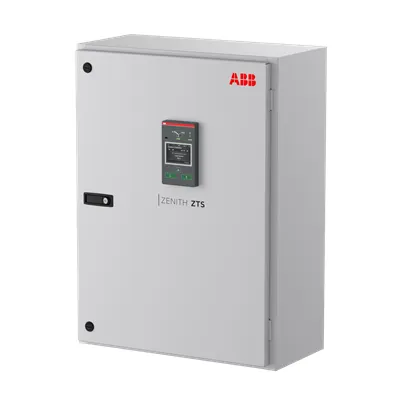
Quick Summary
ABB 1SCD014736R1 is a CSSE DT four-pole power contactor designed for reliable 208 V AC control in industrial equipment. End users often face mid-cycle faults, unpredictable open/close sequences, and costly downtime that disrupt production. This unit carries UL 1008 certification, ETIM EC000066 classification, and WEEE category 4 designation, supporting safety compliance and responsible disposal. With a 100 A rating, switched neutral configuration, and delayed transition, it delivers safer panel wiring and faster installations, reducing maintenance costs and improving overall efficiency. As an ABB solution, it integrates seamlessly with standard electrical protection and circuit control architectures, supporting reliable motor control and machine safety.
Product Information
Conflict Minerals Reporting Template (CMRT)
CMRT - Conflict Minerals Reporting Template
Instructions and Manuals
ZTGSE and ZTSSE Operation & Maintenance Manual
Wiring Diagram
77A-2008 ZTSDSE 30-1200A Electrical Schematic
Minimum Order Quantity
1 piece
Customs Tariff Number
853710
Country of Origin
United States (US)
Package Level 1 Units
crate 1 piece
Controller Type
CS (Level 4)
Neutral Type
Switched Neutral
Number of Poles
4P
Rated Frequency (f)
Main Circuit 50/60 Hz
Rated Operational Voltage
208 V AC
Standards
UL1008
Transition Type
Delayed Transition
Ampere Rating
100 A
UL Certificate
cULus - CERTIFICATE OF COMPLIANCE - E35022-Vol1-Sec1-20230616
ETIM 8
EC000066 - Power contactor, AC switching
WEEE Category
4. Large Equipment (Any External Dimension More Than 50 cm)
Feature 1: Four-pole 208 V AC operation with a 100 A rating enables direct control of three-phase motors in compact control panels. Business Impact: Reduces wiring complexity while aligning with UL 1008‑rated devices, improving panel safety and interchangeability. Application: Motor control centers, machine tool frames, conveyors in manufacturing environments. Feature 2: Delayed Transition reduces arcing during startup and shutoff, extending contact life and lowering maintenance frequency. Business Impact: Improves reliability on high‑inertia loads and minimizes downtime in packaging lines and processing equipment. Application: Heavy start/stop cycles in presses and material handling systems. Feature 3: Switched Neutral configuration simplifies wiring and enhances safety in multi‑tier control panels. Business Impact: Eases fault diagnosis and reduces wiring errors during installation and field service. Application: Industrial automation cabinets and distributed control architectures. Feature 4: CS Controller Type (Level 4) delivers robust control logic compatible with standard PLCs and protection devices. Business Impact: Streamlines integration, minimizes programming complexity, and improves diagnostics. Application: OEM machinery and retrofit projects requiring dependable human-machine interfaces. Feature 5: Certifications and environmental compliance including UL 1008, ETIM EC000066, and WEEE Category 4. Business Impact: Supports regulatory procurement, faster approvals, and responsible end‑of‑life disposal. Application: Global manufacturing lines and regulated facilities needing documented standards. Feature 6: Compact, scalable design for 3P4W motor control in panel boards. Business Impact: Saves panel space, reduces install time, and lowers total cost of ownership. Application: New builds and panel modernization projects across process industries.
Get a Quick Quote for a ABB 1SCD014736R1
Chat with us on WhatsApp - fast responses guaranteed
Need to speak with someone? We'll call you back within 2 hours during business hours
Interested in ABB 1SCD014736R1?
Enquire Now
FAQs
To install the ABB 1SCD014736R1, verify the panel is rated for 208 V AC and 50/60 Hz operation, then mount the four-pole device in the designated space. Connect the incoming power to terminals for L1, L2, L3 and Neutral according to the wiring diagram, ensuring proper torque and secure terminal screws. Use the switched neutral configuration to tie control wiring to the neutral bus and integrate with the PLC or protection devices. After wiring, perform a phasecheck and functional test to confirm correct switching, alignment with UL 1008 requirements, and safe startup sequence before commissioning.
CS Level 4 control provides robust logic suitable for industrial motors in three-phase four-wire (3P4W) systems. It supports reliable on/off control, interlocking with protective devices, and compatibility with standard PLCs used in automation cells. This enables predictable start/stop behavior, improved fault handling, and safer operation of conveyors, presses, or machining centers within a single motor control panel architecture.
This ABB contactor carries UL 1008 certification, ETIM EC000066 classification, and WEEE Category 4 designation. UL 1008 confirms safe electrical switching for power control in industrial settings, ETIM ensures standardized product classification and interoperability, and WEEE supports environmental responsibility during disposal. Together, these certifications streamline procurement for regulated industries and simplify compliance during audits and installations.
Regular inspection of terminations for tightness, cleanliness, and corrosion resistance helps preserve contact integrity. The Delayed Transition feature reduces arc wear on startup, extending life for high‑duty cycles. Periodic functional tests with a PLC or protection relay verify correct switching behavior. Keep spare units on hand for rapid replacement to minimize downtime and maintain consistent motor control performance.
Using a UL 1008‑listed contactor enhances safety and reliability, reducing unscheduled downtime and maintenance costs. Its 100 A rating supports substantial load handling, while Switched Neutral and Delayed Transition features lower wear and arc-related issues. Combined with faster installation and standardized specifications, this can shorten project timelines and lower total cost of ownership across a manufacturing line.