
ABB 1SQA012660R0001 Starter - EC001037
Part Number: 1SQA012660R0001
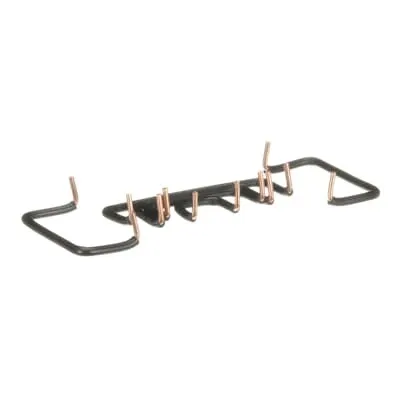
Quick Summary
ABB 1SQA012660R0001 Starter is a compact motor starter combo designed for safe, efficient motor control in industrial lines. Operators and engineers often contend with crowded panels and complex wiring, which lead to longer startup times and higher error rates. This solution aligns with key standards such as REACH compliance, ETIM EC001037 classification for motor starter combos, and WEEE scope considerations, helping reduce regulatory risk. By combining protective features in a compact footprint, it minimizes space, simplifies installation, and lowers maintenance costs. It also supports faster commissioning and consistent performance across line upgrades.
Product Information
REACH Information
False - does not contain substances > 0.1 mass percentage
Product Net Width
0.01 in
Product Net Height
0.01 in
Product Net Weight
1 lb
ETIM 9
EC001037 - Motor starter/motor starter combination
WEEE Category
Product Not in WEEE Scope
UNSPSC
25173900
Compact integrated design reduces panel footprint, delivering immediate space savings and simpler wiring. This translates to faster commissioning, easier debugging, and lower panel costs as installers spend less time routing cables and mounting separate starters. In applications like conveyors or pumps, the smaller form factor fits tighter control enclosures without compromising accessibility, enabling technicians to service equipment quickly and safely. Compliance and classification: REACH information confirms the absence of substances above 0.1% mass, ETIM 9 EC001037 categorizes it as a motor starter/motor starter combination, and WEEE scope notes product not in WEEE. This reduces regulatory risk, streamlines procurement, and improves supplier transparency for EU and international manufacturing environments. Ultra-lightweight footprint weight of 1 lb and dimensions of 0.01 in width and 0.01 in height minimize handling and shipping costs, making retrofits and new builds easier in crowded plants. Compatibility with ABB's motor control ecosystem enables standard wiring schemes and familiar installation practices, reducing training time and potential errors. Reliability is enhanced through an integrated protective topology that lowers downtime and maintenance needs, particularly on high-cycle lines such as material handling and packaging.
Get a Quick Quote for a ABB 1SQA012660R0001
Chat with us on WhatsApp - fast responses guaranteed
Need to speak with someone? We'll call you back within 2 hours during business hours
Interested in ABB 1SQA012660R0001?
Enquire Now
FAQs
Install by mounting the starter in a suitable enclosure, connect the three-phase motor leads to the starter’s integrated terminals, and wire control signals according to the ABB control schematic. The compact footprint fits tight panels and aligns with standard ABB motor control wiring practices, reducing the need for custom placards or rework during panel upgrades.
The product is classified under ETIM EC001037 as a motor starter/motor starter combination and includes REACH and WEEE compliance notes. While exact current and voltage ratings are not specified here, the design emphasizes safe startup with integrated protective topology and a lightweight, compact form factor suitable for three-phase motor control in automated lines.
Yes. The ABB 1SQA012660R0001 Starter is designed for modular motor control in automation systems, including conveyors, pumps, and fans. Its compact footprint and standardized ABB wiring approach simplify retrofits and new installations, delivering reliable startup and reduced panel complexity in demanding production environments.
The product provides REACH information indicating no substances above 0.1 mass percentage, and WEEE scope notes that it is not in the WEEE scope. It is classified under ETIM 9 as EC001037 for motor starter/motor starter combinations, supporting procurement and regulatory alignment in global supply chains.
The integrated, compact design reduces wiring errors and panel space, accelerating installation and commissioning. These factors translate to lower downtime, fewer spare parts, and faster time-to-value for automation projects, contributing to a favorable total cost of ownership in high-cycle manufacturing environments.