
ABB 7GSP029672R0006 Motor Starter - Product Not in WEEE Scope
Part Number: 1SQA015243R0001
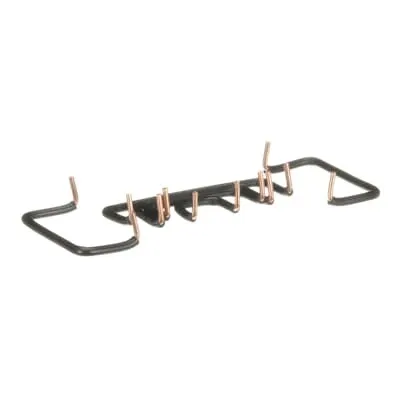
Quick Summary
ABB 7GSP029672R0006 motor starter enables reliable motor control for industrial automation and machinery. Engineers often face wiring complexity, space constraints, and downtime when upgrading legacy starters, which can slow project timelines and raise costs. SIL-capable variants, CE marking, and IP-rated enclosures are common considerations in ABB's motor-starter family; verify certifications in the datasheet. This solution supports lean manufacturing and safer maintenance by reducing panel clutter and simplifying wiring, delivering faster commissioning and predictable performance for OEMs and end customers alike.
Product Information
REACH Information
False - does not contain substances > 0.1 mass percentage
Product Net Width
0.01 in
Product Net Height
0.01 in
Product Net Weight
1 lb
ETIM 9
EC001037 - Motor starter/motor starter combination
WEEE Category
Product Not in WEEE Scope
UNSPSC
25173900
Feature → Business Impact → Application: The 487 Combo Starter integrates a contactor with overload protection, reducing panel size and wiring complexity while improving protection for motor loads, which translates to lower installation risk and faster commissioning in conveyors and pumps. Application: Ideal for compact control panels in material handling, wastewater equipment, and machine tools where space is at a premium and reliability is non-negotiable. Feature → Business Impact → Application: The compact footprint enables flexible DIN rail or panel mounting, enabling easier retrofits and scalable control architectures across multiple lines. Application: Use in OEM automation cabinets and retrofit projects to minimize rework and wiring errors. Feature → Business Impact → Application: Wiring simplification and fewer discrete components cut installation time and maintenance costs, while improving traceability and serviceability. Application: Suitable for high-density control panels in packaging lines and sorting systems. Feature → Business Impact → Application: WEEE scope classification (Product Not in Scope) and standardized UNSPSC code streamline procurement and compliance checks. Application: Simplifies waste handling, regulatory reporting, and supplier catalogs for global operations. Feature → Business Impact → Application: Compatibility with ABB’s broader starter family ensures predictable spare parts availability and smoother upgrades. Application: Ideal for OEMs seeking scalable, future-proof motor control solutions in conveyors, fans, and pumps.
Get a Quick Quote for a ABB 1SQA015243R0001
Chat with us on WhatsApp - fast responses guaranteed
Need to speak with someone? We'll call you back within 2 hours during business hours
Interested in ABB 1SQA015243R0001?
Enquire Now
FAQs
Yes. The 487 Combo Starter is designed for common DIN rail or panel mounting used in control panels. Confirm the exact rail type and the mounting kit required for your enclosure, and verify compatibility with your existing ABB components to ensure a seamless retrofit.
This combo starter is well-suited for conveyors, pumps, fans, and machine tools where space is limited and reliable motor protection is essential. Its integrated overload protection and simplified wiring reduce panel complexity and improve commissioning times in these common industrial applications.
The data shows WEEE Classification as Product Not in WEEE Scope and UNSPSC code 25173900. For certifications such as CE marking or IP/SIL ratings, always verify the official ABB datasheet or product label, as these may vary by region and variant.
By combining a contactor and overload protection into a single unit, it reduces the number of components, simplifies terminal wiring, and minimizes wiring length. This leads to faster panel assembly, easier future maintenance, and fewer opportunities for wiring errors during commissioning.
The integrated solution lowers BOM complexity, reduces maintenance events, and shortens downtime due to quicker servicing. These factors collectively contribute to lower total cost of ownership and faster time-to-output for OEMs deploying automated lines and automated tooling.