
ABB 1SQA016034R0001 Motor Starters - Non-Combination
Part Number: 1SQA016034R0001
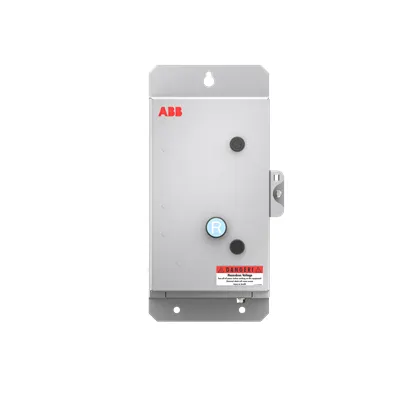
Quick Summary
ABB 1SQA016034R0001 Motor Starters provide reliable motor control for industrial panels. Engineers often struggle with wiring complexity and space constraints during panel upgrades. Certifications such as CE marking, IP ratings, and SIL are not listed in the data; please verify with ABB datasheets to ensure compliance. This non-combination motor starter simplifies wiring and panel integration, delivering a compact solution that reduces installation time and total cost of ownership for machine builders and maintenance teams. With ABB's design philosophy, you gain predictable performance across diverse automation environments, and the option to scale with your control architecture. The product supports business value through improved reliability, streamlined spare-part management, and faster commissioning.
Product Information
Product Net Width
0.01 in
Product Net Height
0.01 in
Product Net Weight
1 lb
WEEE Category
Product Not in WEEE Scope
UNSPSC
25173900
Feature: Ultra-compact dimensions and light weight. Benefit: Frees panel space and reduces mounting hardware requirements, enabling easier retrofits and cleaner wiring. Application: Ideal for tight-control panels in automated lines where space is at a premium. Feature: Non-Combination design. Benefit: Minimizes wiring routes and simplifies control schematics, speeding wiring verification and reducing fault-prone connections. Application: Suitable for modular motor control in machinery that evolves over time. Feature: Lightweight construction at 1 lb. Benefit: Easier handling during installation and less dynamic load on panel rails, improving overall installation speed. Application: Fits in dense control enclosures without requiring heavy support hardware. Feature: Regulatory status and classification. Benefit: Clear regulatory status helps compliance planning in regional builds and procurement reviews. Application: Supports cost-effective lifecycle management in manufacturing environments. Feature: UNSPSC 25173900 code. Benefit: Consistent categorization for procurement and spend analytics. Application: Streamlines sourcing across enterprise supply chains. Feature: Compatibility with standard motor-control ecosystems. Benefit: Reduces integration risk and accelerates commissioning by aligning with common ABB and panel-building practices. Application: Suitable for machine tools, conveyors, and packaging lines where robust motor control is needed.
Get a Quick Quote for a ABB 1SQA016034R0001
Chat with us on WhatsApp - fast responses guaranteed
Need to speak with someone? We'll call you back within 2 hours during business hours
Interested in ABB 1SQA016034R0001?
Enquire Now
FAQs
Yes, this model is designed for integration into typical motor starter panels used across industrial automation. Verify coil voltage and contact arrangement per the ABB datasheet, and ensure compatible enclosure mounting methods (panel or DIN rail) to match your control architecture. The non-combination design can simplify wiring schemes and reduce panel complexity during retrofits or new builds.
Key specs include a product net width of 0.01 in, product net height of 0.01 in, and a net weight of 1 lb. The item is categorized under UNSPSC 25173900 and is listed as Product Not in WEEE Scope. These details help with panel layout planning, procurement coding, and regulatory review during project scoping.
This non-combination ABB motor starter is suited for panel-mounted motor control in automated lines, packaging equipment, and general machine tooling. Its compact footprint supports tight enclosure spaces, while the modular approach allows updates to control logic without overhauling the entire starter assembly.
The provided data does not specify explicit CE, IP, or SIL certifications. For final compliance, consult the official ABB datasheet or contact ABB support to confirm current certifications and regional approvals before deployment in regulated environments.
The compact, non-combination design reduces wiring complexity and panel footprint, which can lower installation time and labor costs. Lighter weight eases handling during installation and maintenance checks. Coupled with straightforward commissioning and standardized procurement codes, this can contribute to lower total cost of ownership over the device lifecycle.