
ABB 2TFH100520R1001 Moulded Case Breaker - IEC60947-2
Part Number: 2TFH100520R1001
Quick Summary
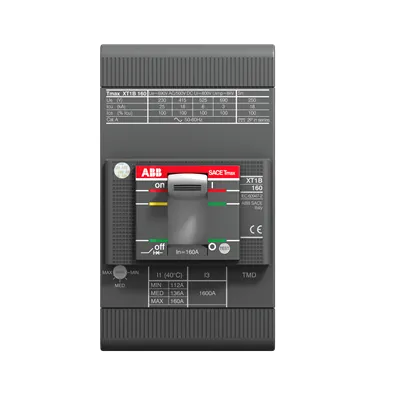
ABB 2TFH100520R1001 is a moulded case circuit breaker designed to protect power distribution in industrial automation panels. This device helps reduce nuisance trips and downtime while simplifying panel wiring and testing. It is certified to IEC 60947-2 and CE conformity, with RoHS compliance ensuring minimal hazardous substances in installations; WEEE categorization further supports responsible end-of-life handling. With a 3P configuration, rated current of 125 A, and an operational voltage up to 690 V AC (500 V DC), it supports safe, scalable energy management across diverse industrial applications. The compact form factor and plug-in terminal connection streamline installation, allowing engineers to meet tight project timelines and ongoing maintenance needs.
Product Information
Extended Description
2TFH100520R1001 ABB: XT1B160 TMD125/1250 PMP 3P
Environmental Product Declaration - EPD
NoDecNee
REACH Declaration
REACh Declaration ABB Sace circuit breakers
RoHS Information
RoHS Declaration ABB Sace circuit breakers
RoHS Status
Following EU Directive 2011/65/EU and Amendment 2015/863 July 22, 2019
Conflict Minerals Reporting Template (CMRT)
CMRT - Conflict Minerals Reporting Template
Environmental Information
Breakers - Packaging disposal information
Customs Tariff Number
85362000
Product Main Type
SACE Tmax XT
Product Name
Moulded Case Circuit Breaker
Product Type
Automatic Circuit Breaker
Version
P
Current Type
AC/DC
Electrical Durability
8000 cycle | 120 cycles per hour
Mechanical Durability
25000 cycle | 240 cycles per hour
Number of Poles
3P
Power Loss
at Rated Operating Conditions per Pole 14.7 W
Rated Current (In)
125 A
Rated Impulse Withstand Voltage (Uimp)
8 kV
Rated Insulation Voltage (Ui)
800 V
Rated Operational Voltage
690 V AC | 500 V DC
Rated Service Short-Circuit Breaking Capacity (Ics)
(220 V AC) 25 kA | (230 V AC) 25 kA | (240 V AC) 25 kA | (380 V AC) 18 kA | (415 V AC) 18 kA | (440 V AC) 11.5 kA | (500 V AC) 8 kA | (525 V AC) 6 kA | (690 V AC) 3 kA | (250 V DC) 2 Poles in Series 18 kA | (500 V DC) 3 Poles in Series 18 kA
Rated Ultimate Short-Circuit Breaking Capacity (Icu)
(220 V AC) 25 kA | (230 V AC) 25 kA | (240 V AC) 25 kA | (380 V AC) 18 kA | (415 V AC) 18 kA | (440 V AC) 15 kA | (500 V AC) 8 kA | (525 V AC) 6 kA | (690 V AC) 3 kA | (250 V DC) 2 Poles in Series 18 kA | (500 V DC) 3 Poles in Series 18 kA
Rated Uninterrupted Current (Iu)
160 A
Release
TMD
Release Type
TM
Short-Circuit Performance Level
B
Standards
IEC60947-2 | GB/T 14028.2
Sub-type
XT1
Terminal Connection Type
Plug-In Circuit-Breakers
Data Sheet, Technical Information
SACE Tmax XT IEC Low voltage molded case circuit-breakers Catalog | SACE Tmax XT IEC TECHNICAL CHARACTERISTICS Low voltage molded case circuit-breakers
Declaration of Conformity - CE
EC Declaration of Conformity Tmax XT1
Instructions and Manuals
Installation instructions XT1
WEEE Category
5. Small Equipment (No External Dimension More Than 50 cm)
Feature: 3-pole configuration with a 125 A rated current. Business Impact: It delivers coordinated protection for multi-phase loads, reducing overload risk and unplanned downtime. Application: Suitable for control panels in manufacturing facilities, conveyors, and machine tools. Feature: High fault current ratings Icu/Ics up to 25 kA. Business Impact: Enhances system resilience against short-circuit events, protecting downstream equipment. Application: Main distribution sections and motor starter circuits in industrial environments. Feature: Rated Operational Voltage of 690 V AC / 500 V DC and U_i insulation of 800 V. Business Impact: Supports safe operation across diverse plant electrical infrastructure and mixed AC/DC services. Application: Industrial power distribution in automation cabinets and high-demand drives. Feature: Power loss of 14.7 W per pole and long mechanical/electrical durability. Business Impact: Reduces energy use and extends service life, lowering maintenance and replacement costs. Application: High-cycle switching typical in packaging lines, presses, and CNC equipment. Feature: Compliance and installation usability with IEC 60947-2, CE, RoHS, CMRT, WEEE, and plug-in terminal connections. Business Impact: Streamlines procurement, regulatory alignment, and fast, error-free installation. Application: OEM panel builds, service parts stocking, and field replacements in automation plants.
Get a Quick Quote for a ABB 2TFH100520R1001
Chat with us on WhatsApp - fast responses guaranteed
Need to speak with someone? We'll call you back within 2 hours during business hours
Interested in ABB 2TFH100520R1001?
Enquire Now
FAQs
To ensure compatibility, verify a 3P plug-in circuit-breaker with 125 A rating and 690 V AC operating voltage fits your panel's busbar and terminal scheme. ABB 2TFH100520R1001 uses plug-in terminals for fast replacement and minimal field wiring. Check machine tool, conveyor, or automation cabinet designs to confirm clearance, mounting footprint, and coordination with upstream protective devices.
The device supports Ics up to 25 kA and Icu up to 25 kA depending on voltage, which provides strong fault-current protection and reduces the likelihood of cascading failures in your line. This enables safer motor starters and downstream equipment, improving uptime on automated lines and minimizing collateral damage during short circuits.
Yes, it is rated for AC and DC applications, with a rated operational voltage of 690 V AC and 500 V DC. This makes it suitable for mixed-supply control panels found in modern facilities, while maintaining consistent protection characteristics across voltage domains and simplifying spare-parts stocking.
The product carries IEC 60947-2 standards compliance and a CE declaration of conformity, with RoHS information and CMRT reporting. WEEE categorization supports responsible disposal, and the 3P 125 A device uses plug-in terminals to ease installation and reduce commissioning risks.
Expect lower maintenance cost thanks to 8000 electrical cycles and 25000 mechanical cycles, plus 14.7 W power loss per pole that reduces energy use during operation. With robust protection against faults and straightforward replacement, the total cost of ownership improves for OEMs and end users.