
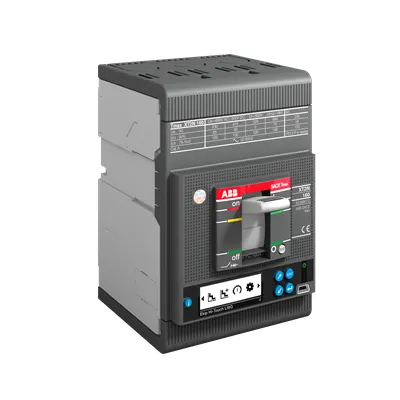
ABB 2TFH102108R1001 Moulded Case Breaker - IEC60947-2
Part Number: 2TFH102108R1001
Quick Summary
ABB 2TFH102108R1001 Moulded Case Breaker protects circuits in industrial switchgear and motor control centers. Engineers often struggle with reliable short-circuit protection, nuisance trips, and regulatory compliance across diverse voltages. This device carries CE conformity and IEC60947-2 compliance, with RoHS and CMRT declarations, ensuring safe operation and traceable material sourcing. By delivering a robust 4-pole design with clear current ratings and a withdrawable connection, it supports scalable protection schemes while reducing maintenance downtime and total cost of ownership in manufacturing facilities and critical process lines.
Product Information
Extended Description
2TFH102108R1001 ABB: XT2H160 TMA50/500 WMP 4P
Environmental Product Declaration - EPD
NoDecNee
REACH Declaration
REACh Declaration ABB Sace circuit breakers
RoHS Information
RoHS Declaration ABB Sace circuit breakers
RoHS Status
Following EU Directive 2011/65/EU and Amendment 2015/863 July 22, 2019
Conflict Minerals Reporting Template (CMRT)
CMRT - Conflict Minerals Reporting Template
Environmental Information
Breakers - Packaging disposal information
Customs Tariff Number
85362000
Product Main Type
SACE Tmax XT
Product Name
Moulded Case Circuit Breaker
Product Type
Automatic Circuit Breaker
Version
W
Current Type
AC/DC
Electrical Durability
8000 cycle | 120 cycles per hour
Mechanical Durability
25000 cycle | 240 cycles per hour
Number of Poles
4P
Power Loss
at Rated Operating Conditions per Pole 4.7 W
Rated Current (In)
50 A
Rated Impulse Withstand Voltage (Uimp)
8 kV
Rated Insulation Voltage (Ui)
1000 V
Rated Operational Voltage
690 V AC | 500 V DC
Rated Service Short-Circuit Breaking Capacity (Ics)
(220 V AC) 100 kA | (230 V AC) 100 kA | (240 V AC) 100 kA | (380 V AC) 70 kA | (415 V AC) 70 kA | (440 V AC) 65 kA | (500 V AC) 50 kA | (525 V AC) 30 kA | (690 V AC) 15 kA | (250 V DC) 2 Poles in Series 70 kA | (500 V DC) 3 Poles in Series 70 kA
Rated Ultimate Short-Circuit Breaking Capacity (Icu)
(220 V AC) 100 kA | (230 V AC) 100 kA | (240 V AC) 100 kA | (380 V AC) 70 kA | (415 V AC) 70 kA | (440 V AC) 65 kA | (500 V AC) 50 kA | (525 V AC) 30 kA | (690 V AC) 15 kA | (250 V DC) 2 Poles in Series 70 kA | (500 V DC) 3 Poles in Series 70 kA
Rated Uninterrupted Current (Iu)
160 A
Release
TMA
Release Type
TM
Remarks
ATLAS
Short-Circuit Performance Level
H
Standards
IEC60947-2 | GB/T 14028.2
Sub-type
XT2
Terminal Connection Type
Withdrawable Circuit-Breakers
Data Sheet, Technical Information
SACE Tmax XT IEC Low voltage molded case circuit-breakers Catalog | SACE Tmax XT IEC TECHNICAL CHARACTERISTICS Low voltage molded case circuit-breakers
Declaration of Conformity - CE
EC Declaration of Conformity Tmax XT2
Instructions and Manuals
Installation Instructions XT2
WEEE Category
5. Small Equipment (No External Dimension More Than 50 cm)
Feature: 4P withdrawable design with AC/DC compatibility and a rated operational voltage of 690 VAC / 500 V DC. Business Impact: Enables safe, modular protection across mixed-voltage feeders while simplifying maintenance and future upgrades. Application: ideal for modern switchgear and motor control centers in heavy industry. Feature: Ics up to 100 kA and Icu up to 70–100 kA depending on voltage. Business Impact: Improves short-circuit resilience and safeguards equipment from severe fault currents, reducing unplanned downtime. Application: suitable for high-energy applications in automotive, material handling, and process plants. Feature: Power loss of 4.7 W per pole and rated current of 50 A. Business Impact: Enhances energy efficiency in protected circuits and minimizes heat-related stresses in control panels. Application: suitable for compact distribution boards and compact MCCs. Feature: 8 kV Rated Impulse Withstand Voltage and 1000 V Rated Insulation Voltage. Business Impact: Delivers robust surge protection and insulation margins for long-term reliability in harsh industrial environments. Application: protects feeders and busbars in industrial automation installations. Feature: RoHS and REACH declarations plus CMRT. Business Impact: Ensures compliance for regulated markets and supports responsible sourcing in supply chains. Application: aligns with global procurement standards and sustainability goals.
Get a Quick Quote for a ABB 2TFH102108R1001
Chat with us on WhatsApp - fast responses guaranteed
Need to speak with someone? We'll call you back within 2 hours during business hours
Interested in ABB 2TFH102108R1001?
Enquire Now
FAQs
This 4-pole Moulded Case Breaker is designed as a withdrawable circuit-breaker, compatible with XT2-class switchgear architecture. Follow ABB installation instructions XT2 for mechanical fit, terminal connections, and interlock handling. Verify busbar spacing and clearance, then perform a controlled, staged energization to ensure correct tripping behavior and diagnostic readability.
The device is rated for 50 A with AC/DC current type, 690 VAC / 500 V DC operating voltage, and 1000 V insulation. It provides 8 kV rated impulse withstand voltage, 4.7 W power loss per pole, and a short-circuit breaking capacity up to 100 kA (Ics/Icu varies by voltage). These figures support reliable protection in demanding industrial environments.
Yes. The 4P XT2 design, high Ics/Icu ratings, and high voltage tolerance make it well-suited for motor protection in demanding manufacturing lines. Its 50 A rating, low power loss, and withdrawable format simplify routine maintenance and motor start-up transients, while ensuring consistent tripping performance under fault conditions.
This MCCB carries CE conformity under the EC Declaration of Conformity, IEC60947-2 compliance, and RoHS/CMRT declarations. WEEE considerations apply to packaging, and all declarations support regulatory compliance in regulated markets, aiding procurement and audit readiness.
Electrical durability is rated at 8000 cycles (120 cycles/hour) and mechanical durability at 25000 cycles (240 cycles/hour). This combination supports longer service life in frequent switching applications, reduces replacement cycles, and lowers lifecycle costs for high-demand automation environments.