
ABB 3ABD00048484 LV AC Servo Motor - Absolute Encoder
Part Number: 3ABD00048484
Quick Summary
ABB 3ABD00048484 LV AC servo motor provides precise motion control for automated machinery and production lines. Long setup times and repeated homing cycles can bottleneck throughput in complex automation tasks. Typical certifications such as CE safety compliance, IP-rated enclosures for rugged environments, and SIL readiness ensure reliability in demanding applications. An absolute encoder option eliminates homing cycles, reducing machine setup time, while pairing with MotiFlex e180 or MicroFlex e190 drives boosts efficiency. Engineered for high torque density and quick dynamic response, the eSM motor supports precise positioning in pick-and-place and robotics-integrated lines. For procurement teams, this translates to lower spare-part costs, easier maintenance, and higher uptime across multiple automation projects.
Product Information
Extended Description
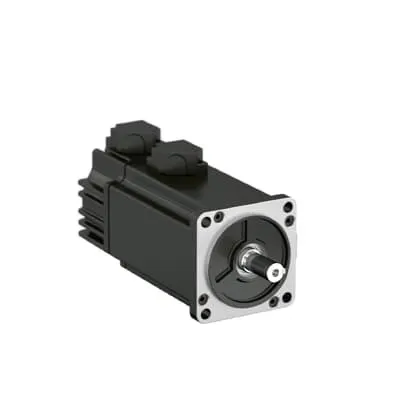
3ABD00048484 ABB: eSM servo motor is available in various flange sizes, with high torque density and quick dynamic response. The servo motors have a high reliable, low-maintenance, and energy efficient design. Combined with the MotiFlex e180 and MicroFlex e190 servo drives, the overall system reliability and efficiency are greatly improved. eSM motor encoder provides precise position information. An absolute encoder can eliminate homing cycles, reducing machine set-up time. All features make the motor meet the demands of higher productivity and product quality.
With high torque density and rapid dynamic response, the eSM servo motor enables faster cycle times and tighter motion control for demanding packaging, robotics, and assembly lines. This translates to higher throughput and improved product quality even at elevated speeds, reducing waste and boosting overall equipment effectiveness. Designed for industrial environments, the motor supports quick commissioning when paired with ABB drives, minimizing time-to-production and easing maintenance planning. An integrated encoder provides precise position feedback, and an absolute encoder option eliminates homing cycles, reducing machine setup time for complex, multi-axis tasks. This translates to faster commissioning, lower operator dependency, and more repeatable results in high-mix, low-volume production runs. The encoder integration also supports industry-standard interfaces, simplifying retrofit projects and reducing the risk of misalignment between controller and motor. ABB designed the eSM motor for reliability with low-maintenance components and durable bearings that withstand continuous operation in automated lines. Its energy-efficient design reduces running costs, while diagnostic-ready construction supports proactive maintenance before faults impact production. Customers report lower total cost of ownership when replacing legacy servo motors with this ABB solution, thanks to longer life and fewer unexpected outages. Compatibility with MotiFlex e180 and MicroFlex e190 drives streamlines commissioning, tuning, and feedback handling in a single, validated control loop. This tight integration reduces engineering time, shortens time-to-market, and supports consistent performance across multiple axes in complex systems. Installation is simplified by familiar ABB hardware, standardized interfaces, and straightforward parameterization, helping procurement avoid custom solutions. The motor is available in multiple flange sizes and operates on 220 V AC, simplifying design integration and retrofit projects. By standardizing on a common AC supply and compatible ABB drives, engineering teams can reduce spare-parts inventories and shorten commissioning windows. In practice, engineers leverage this flexibility to accelerate deployments across packaging, material handling, and machine-tending applications, delivering faster ROI for capital-intensive projects.
Get a Quick Quote for a ABB 3ABD00048484
Chat with us on WhatsApp - fast responses guaranteed
Need to speak with someone? We'll call you back within 2 hours during business hours
Interested in ABB 3ABD00048484?
Enquire Now
FAQs
To install ABB 3ABD00048484, connect to a 220 V AC supply and pair the motor with MotiFlex e180 or MicroFlex e190 drives using the encoder feedback interface specified by ABB. Enable the absolute encoder option to eliminate homing cycles. Configure torque, speed, and acceleration profiles in the drive software, and verify safety features such as Safe Torque Off.
Key performance specs include 0.75 kW nominal power, 2.39 N·m torque (Tn), and 220 V operation, with optional absolute encoder feedback for precise positioning. The motor offers high torque density and rapid dynamic response, delivering repeatable motion in packaging, robotics, and automated assembly when paired with compatible ABB drives. This supports precise time synchronization and smooth throughput.
Yes. The eSM motor's torque, high-speed capability, and accurate feedback support high-throughput packaging, robotic pick-and-place, and automated assembly lines. Absolute encoder option minimizes homing cycles, while the MotiFlex e180 and MicroFlex e190 drive compatibility enables scalable, multi-axis configurations with predictable timing and repeatable results. This makes it a strong fit for food and beverage, consumer electronics, and automation suppliers seeking reliable, serviceable motion control.
Typical standards for ABB servo motors include CE safety compliance and robust construction for industrial use; IP-rated enclosures provide protection in harsh environments where dust and moisture are present; SIL readiness can be considered at the system level when safety-rated components are integrated. Always verify the exact model's certifications with your supplier and ensure alignment with local regulatory requirements.
ROI is driven by uptime, reduced setup time, and energy efficiency. Absolute encoder options shorten machine commissioning and prevent misalignments, while compatibility with ABB drives minimizes integration risk and spare-parts variety. In practice, customers report faster start-up, fewer calibration cycles, and measurable improvements in throughput and production yield across multiple automation projects.