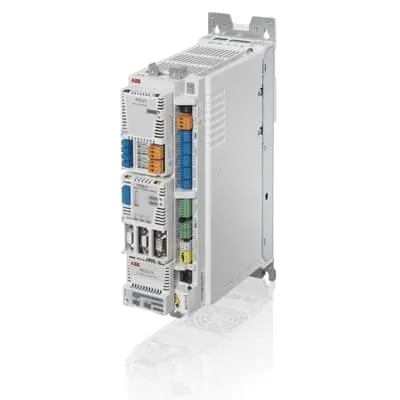
ABB ACSM1-04LS-260A-4 Servo Drive - 160 kW, IN:260A
Part Number: 3AUA0000044294
Quick Summary
ABB ACSM1-04LS-260A-4 Servo Drive is designed to precisely control motor speed for industrial automation applications. This drive helps operators optimize performance on conveyors, packaging lines, and machine tools by delivering smooth torque and rapid response. Engineers often struggle with tune-time, energy waste, and unplanned downtime caused by inconsistent motor control. Typical certifications for ABB drives include CE compliance and suitable IP protection, with SIL safety options available for safety-critical systems, depending on regional requirements. With its scalable performance and straightforward integration, this model supports lean manufacturing goals, reduces maintenance overhead, and accelerates project timelines. Rely on ABB's reliability to improve throughput and machine availability across your automation stack.
Product Information
Feature: 160 kW output power enables efficient handling of high-torque loads with precise speed control, reducing overshoot and improving process stability. Business Impact: Higher production consistency and lower energy waste on demanding applications such as heavy conveyors and extrusion lines. Application: Packaging lines and material handling where precise torque control translates to smoother operation. Feature: IN 260A input rating supports strong power delivery and fast transient response, enhancing motor performance during load changes. Business Impact: Faster ramping, reduced mechanical stress, and improved drive resilience. Application: High-inertia motor start-ups and rapid stop sequences in manufacturing cells. Feature: Robust motor control algorithms within the ACSM1 family enable smooth start/stop and accurate velocity profiles. Business Impact: Lower maintenance costs due to reduced mechanical wear and improved process repeatability. Application: CNC-type tooling, automated gripping, and robotic subsystems. Feature: Built-in protection and diagnostics improve reliability and uptime. Business Impact: Early fault detection minimizes unexpected outages and supports proactive maintenance planning. Application: Continuous process lines in packaging, food & beverage, and plastics. Feature: Fieldbus and standard integration compatibility simplifies installation and OEM integration. Business Impact: Faster commissioning, easier replacement of legacy drives, and reduced lifecycle costs. Application: OEM s and retrofit projects across diverse automation environments.
Get a Quick Quote for a ABB 3AUA0000044294
Chat with us on WhatsApp - fast responses guaranteed
Need to speak with someone? We'll call you back within 2 hours during business hours
Interested in ABB 3AUA0000044294?
Enquire Now
FAQs
To install, verify electrical ratings align with the drive (160 kW, IN 260A), mount the unit in a compliant enclosure, connect motor and power cables per the manual, and load the configuration into the controller using the ABB drive software. Verify wiring integrity, perform a controlled ramp test, and document parameter settings for future maintenance.
Yes, ABB servo drives in this family are designed for straightforward integration with standard fieldbus protocols used in modern automation systems, enabling seamless communication with PLCs, HMIs, and other control devices to support synchronized motor control.
Expect smoother acceleration and deceleration, reduced torque ripple, and improved startup reliability. The 260A input capability supports robust power delivery during peak load changes, helping maintain consistent speed under heavy or dynamic operating conditions.
Check the datasheet for region-specific certifications. ABB drives commonly reference CE compliance and suitable enclosure IP ratings, with SIL safety options available for safety-critical configurations. Confirm exact ratings with your regional ABB distributor or via the datasheet for the model you’re using.
Benefits include energy efficiency from precise motor control, reduced downtime due to proactive diagnostics, and faster commissioning with easier integration. Over the life of a production line, these improvements translate to lower operating costs, higher throughput, and improved machine uptime.