
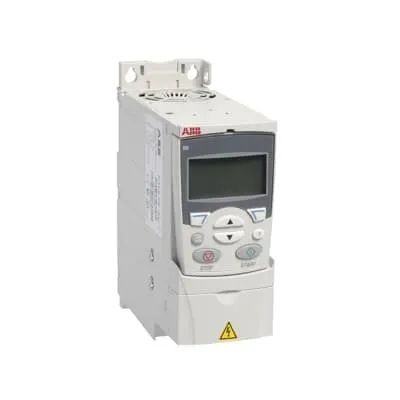
ABB ACS310-01U-02A4-2 LV AC drive - Pump & fan control, 0.5 Hp
Part Number: 3AUA0000049458
Quick Summary
ABB ACS310-01U-02A4-2 LV AC drive provides variable-speed control for pumps and fans. Operators often struggle with energy waste, motor wear, and startup surges when speed is not matched to demand. This drive supports built-in PID controllers and pump-and-fan control, designed for variable-torque applications in booster pumps and supply/return fans, aligning with CE safety and EMC standards. With compact integration and ABB service support, it helps OEMs and maintenance teams reduce energy costs, extend equipment life, and simplify commissioning.
Product Information
Extended Description
3AUA0000049458 ABB: The ACS310 drives are designed for variable torque applications such as booster pumps and supply and return fans. The drive includes a powerful and beneficial set of features designed for pump and fan applications. These features include built-in PID controllers and pump and fan control (PFC) that varies the drive=E2=80=99s performance in response to changes in pressure, flow or other external data.
The ABB ACS310-01U-02A4-2 LV AC drive includes built-in PID controllers and a dedicated pump and fan control (PFC) to automatically adapt performance based on pressure and flow data. Business impact: improved energy efficiency, smoother operation, and reduced wear due to precise torque management in variable-torque applications. Application: booster pumps and supply/return fans in HVAC and process systems, delivering consistent performance with lower operating costs. The drive is designed for low-voltage motor control (Pn 0.5 Hp, 2.4 A), enabling compact installation in existing cabinets and layouts. With straightforward parameterization and reliable ABB support, installation time is reduced and commissioning risks are minimized, helping field teams meet tight project timelines. Long-tail keywords addressed include pump and fan control, variable torque drives, low-voltage motor control, energy-efficient VFDs, and PID-driven automation.
Get a Quick Quote for a ABB 3AUA0000049458
Chat with us on WhatsApp - fast responses guaranteed
Need to speak with someone? We'll call you back within 2 hours during business hours
Interested in ABB 3AUA0000049458?
Enquire Now
FAQs
To install, verify supply voltage, mount the drive in a suitable enclosure, and connect the motor leads to the U, V, W terminals. Set motor data in the parameter list, including rated current at 2.4 A and the 0.5 Hp rating. Configure control mode for pumps or fans and enable PID for closed-loop regulation. Ensure protective devices and proper wiring practices are followed for safe startup and commissioning.
Key specs include a 0.5 Hp (Pn) rated motor output and a 2.4 A current rating, suitable for low-voltage motor control. The drive features built-in PID controllers and pump and fan control (PFC) to adapt performance based on external data. It targets variable-torque applications like booster pumps and supply/return fans, delivering efficient speed modulation and steady operation.
Yes. The drive is designed for variable-torque applications such as booster pumps and HVAC supply/return fans. Its built-in PID and PFC features enable responsive regulation of flow and pressure, reducing energy consumption and startup shocks. This makes it well-suited for HVAC systems, process cooling circuits, and other applications requiring precise pump and fan control.
Typical LV drives in this category are CE compliant and designed to meet EU safety and EMC standards. Availability of IP ratings and SIL configurations depends on enclosure and system integration. Always verify the specific datasheet for this model to confirm exact certifications, enclosure rating, and any safety-function options that apply to your installation and regulatory requirements.
The ACS310-01U-02A4-2 enables energy savings through precise speed control, reducing overall motor energy consumption in pumps and fans. Reduced mechanical wear and smoother starts contribute to lower maintenance costs and longer equipment life. With fewer manual interventions during commissioning and simpler control integration, operators can expect faster deployment and improved system reliability over time.