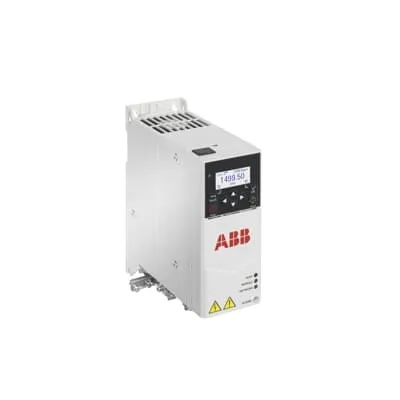
ABB 3AUA0000173829 Machinery Drive Module - UL Pld 2 Hp
Part Number: 3AUA0000173829
Quick Summary
ABB 3AUA0000173829 machinery drive module delivers precise speed control for conveyor and machinery applications. Engineers often face integration headaches and downtime risk when connecting drives to automation networks. The device carries CE marking and UL listing for safe operation and has PROFIsafe-compatible features for safer machine control within PROFINET networks. By enabling easy software customization and robust safety, it delivers predictable performance, reduced downtime, and scalable automation across multiple lines. For machine builders and end users, this translates to faster commissioning, lower maintenance costs, and a clear path to future-proof motor control in evolving industrial environments. This makes it a dependable backbone for automated lines seeking uptime and energy efficiency.
Product Information
Extended Description
3AUA0000173829 ABB: The ACS380 machinery drive comes in several variants ensuring seamless integration into machines and connecting perfectly to automation systems. It=E2=80=99s a great fit for industries such as food and beverage, material handling and textile. Typical applications include mixers, conveyors, EOT and tower cranes, extruders and textile machinery.
With the integrated functional safety features, the ACS380 drive can be also part of the machine=E2=80=99s safety system via PROFIsafe over PROFINET, ensuring the motor is safely stopped when required. In addition, the drive=E2=80=99s software can be easily customized with adaptive programming to match any specific application requirements.
Integrated safety with PROFIsafe over PROFINET lets the ACS380 drive participate in the machine safety system, guaranteeing controlled stop functions and reliable fault signaling across diverse manufacturing environments. On the shop floor, this reduces commissioning time and lowers the likelihood of unsafe startups during line changes for retrofit projects and new line deployments. Manufacturers can cite a clear safety case to auditors while keeping normal production schedules intact across multiple lines and shift cycles.Power density and drive profile support precise speed control for conveyors, mixers, EOTs, and textile machines without oversizing panels. Its 1.5 kW rating and 4.0 A current capability deliver ample torque during start/stop cycles, reducing jitter and belt wear. Owners gain energy efficiency through optimized acceleration profiles and regenerative-friendly operation in typical duty cycles across legacy equipment and modern modular lines.UL listing and CE compliance simplify procurement, audits, and customer acceptance, particularly for regulated food, beverage, and packaging environments across global supply chains. Compact form factor, panel-friendly wiring, and standard fieldbus interfaces reduce installation time and wiring errors in both greenfield installations and retrofit projects. ABB provides documentation and support for engineers migrating from legacy drives, easing retrofits without process disruption and ensuring continued production uptime during migration.Adaptive programming enables control strategies such as trapezoidal velocity, feed-forward torque, and multi-axis coordination for complex lines in high-speed packaging and textile finishing. This reduces engineering time, accelerates commissioning, and lowers project risk when integrating new machines or changing line layouts in high-mix low-volume production environments. Industry feedback confirms quicker repairs and less fixture downtime when replacing drive components.Compatibility with PROFINET and other automation networks ensures seamless data exchange, remote monitoring, and predictive maintenance insights across distributed manufacturing cells. Installation is straightforward with guided parameterization, verified wiring diagrams, and ABB's engineering support for fast success during critical outages and shift changes. All told, users experience faster ROI through reduced downtime, improved energy efficiency, and easier scalability across multiple lines in lean and high-demand production environments.
Get a Quick Quote for a ABB 3AUA0000173829
Chat with us on WhatsApp - fast responses guaranteed
Need to speak with someone? We'll call you back within 2 hours during business hours
Interested in ABB 3AUA0000173829?
Enquire Now
FAQs
Installation starts by selecting the correct voltage and motor parameters, then wiring the drive to the PROFINET network and the motor per ABB guidelines. Ensure PROFIsafe configuration matches your safety architecture and verify encoder feedback if used. Use ABB's commissioning tools to load the application profile, test safe-stop routines, and validate fault signaling before going live.
Key specs include PN 1.5 kW, 4.0 A, 400 V for normal operation, and UL listing of 2 Hp at 480 V. The device is part of the ACS380 family, designed for LV AC motor control in conveyors, mixers, and textile machinery. It supports safety functions via PROFIsafe over PROFINET and offers programmable software to fit specific processes.
Yes, the ACS380 module is suitable for food and beverage lines due to its compact form factor, safe operation features, and integration with automation networks. It supports conveyors and mixers commonly used in processing plants, with safe-stop capabilities and fault signaling that help maintain hygiene and uptime while complying with safety requirements.
Key certifications include CE marking and UL listing as described in the data sheet, along with PROFIsafe compatibility for safety-critical applications. While not all markets specify IP ratings, the drive's safety features and regulatory compliance simplify audits and customer acceptance for globally deployed machinery.
Using ACS380 reduces downtime through integrated safety, remote diagnostics, and simpler commissioning. Its adaptive programming reduces engineering time, while energy-efficient operation lowers operating costs. For manufacturers, the result is a faster return on investment, easier scalability across lines, and improved consistency in process performance.