
ABB 3AXD50000047505 Regenerative Drive - IEC 22 kW
Part Number: 3AXD50000047505
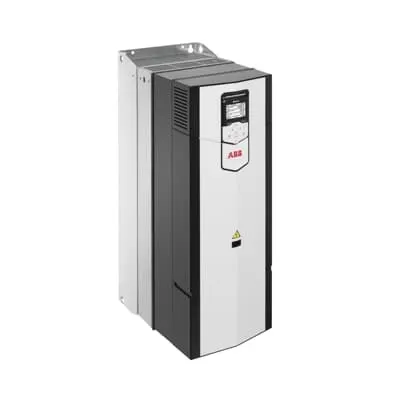
Quick Summary
ABB ACS880-11 regenerative drive provides efficient regenerative braking for LV AC systems in heavy industry applications like conveyors and cranes. Traditional braking often wastes energy as heat and requires extra cooling; regenerative operation captures energy for the broader plant. In regulated environments, CE compliance, SIL safety functionality, and IP-rated protection are essential considerations. This drive integrates with ABB control ecosystems, delivering energy efficiency, reduced cooling loads, and straightforward commissioning for automation projects. The design targets harsh industrial environments across oil & gas, mining, chemicals, cement, and water/wastewater, enabling reliable performance and longer asset life. With a compact, wall-mounted footprint, it simplifies retrofits and minimizes panel space while delivering robust control. This capability is especially valuable for OEMs delivering continuous production lines where uptime and energy costs matter.
Product Information
Extended Description
3AXD50000047505 ABB: The ACS880-11 drives are customized to meet the particular needs of specific industries, such as oil and gas, mining, metals, chemicals, cement, power plants, material handling, pulp and paper, sawmills, marine, water and wastewater, food and beverage, and automotive. They can control a wide range of applications, including cranes, extruders, winches, winders, conveyors, mixers, compressors, centrifuges, test benches, elevators, extruders, pumps and fans. The ACS880-11 is a compact and complete regenerative drive solution with everything you need for regenerative operation in cyclic or continuous braking applications.
With regenerative functionality, the braking energy of the motor is returned to the drive and distributed to the supply network so that it can be utilized by other equipment. With mechanical or resistor braking energy is wasted as heat and additional cooling is often required, whereas regenerative drive operation offers significant savings in energy consumption and cooling. The drive reaches a unity power factor, meaning that electrical energy is used to its full potential. Equipped with an active supply unit and integrated low harmonic line filter, the regenerative drive produces exceptionally low harmonic content.
Regenerative braking returns energy to the supply network rather than dissipating it as heat, reducing energy costs and cooling load in cyclic braking. The drive maintains a high unity power factor and uses an integrated active supply unit with a low harmonic line filter to meet grid codes, delivering exceptionally low harmonic content. Applications span cranes, winders, winches, conveyors, pumps, and fans across oil & gas, mining, metals, and chemicals, providing predictable performance in harsh environments. The ACS880-11 platform offers a compact, complete regenerative solution that minimizes panel footprint and simplifies commissioning, enabling easy retrofits and fast deployment in standard electrical rooms. Compatible with 40 A loads at 500 V (IEC) or 40 A at 480 V (UL), the system supports diverse industrial needs while reducing installation time and parts count. Industry-standard integration with ABB control ecosystems ensures reliable operation, reduced maintenance, and improved asset lifecycle management. This design also addresses common objections by delivering energy efficiency without sacrificing control fidelity or safety, supported by field-proven reliability in demanding sectors such as cement, water treatment, and automotive manufacturing. The result is a lower total cost of ownership through energy savings, reduced cooling requirements, and extended equipment life in automation-driven facilities.
Get a Quick Quote for a ABB 3AXD50000047505
Chat with us on WhatsApp - fast responses guaranteed
Need to speak with someone? We'll call you back within 2 hours during business hours
Interested in ABB 3AXD50000047505?
Enquire Now
FAQs
Plan for the correct supply voltage (IEC 500 V or UL 480 V variants), ensure current ratings align with 40 A, allocate adequate panel space, and provide proper protective devices. The unit is designed for wall-mounted installation and can be integrated into standard electrical rooms with compatible cabling and shielding. Verify motor ratings and ensure wiring conforms to local codes; use the integrated active supply unit to simplify connections and reduce external components.
Regenerative braking returns energy to the power network, reducing external energy consumption and heat generation. This improves overall energy efficiency and lowers cooling requirements. The drive also supports a unity power factor and uses an integrated low harmonic filter to meet grid quality expectations, which helps minimize electrical losses and improves system reliability in cyclic braking scenarios.
Yes. The ACS880-11 regenerative drive is designed for cyclic and continuous braking applications and supports a broad set of loads including cranes, conveyors, winches, winders, pumps, and fans. Its regenerative capability and robust control system address the demanding requirements of oil & gas, mining, metals, and chemical processing, delivering reliable operation and energy efficiency across these sectors.
Check for CE compliance and ensure the product meets your regional safety and electromagnetic compatibility requirements. While the data highlights regenerative capability and grid-friendly features, always confirm with the supplier or ABB documentation for specific certifications such as SIL readiness or IP ratings applicable to your installation and environment.
ROI is driven by energy savings from regenerative braking and reduced cooling needs, combined with improved uptime and longer asset life from enhanced control. Maintenance requirements are typically streamlined due to integrated components (active supply unit and low harmonic filter) reducing external parts. Real-world payback varies with duty cycle, but cyclic braking-intensive operations generally show favorable TCO improvements.