
ABB 3AXD50000158980 Drive Module - ACS880-04F-650A
Part Number: 3AXD50000158980
Quick Summary
ABB 3AXD50000158980 is a flange-mounted LV AC industrial drive module for high-powered motor control in manufacturing and processing lines, engineered to minimize cabinet footprint and wiring complexity. Engineers often wrestle with mounting compatibility, wiring complexity, and integrating new drives with legacy control systems, which can cause project delays and higher installation costs. This module delivers IEC 690 V and UL Pld 700 HP ratings, supports push-through flange mounting, and complements the ACS880-04F lineage for scalable automation and compliance. In practice, it provides consistent performance, easier retrofit capability, and a clear path to longer service life with ABB's proven drive technology.
Product Information
Extended Description
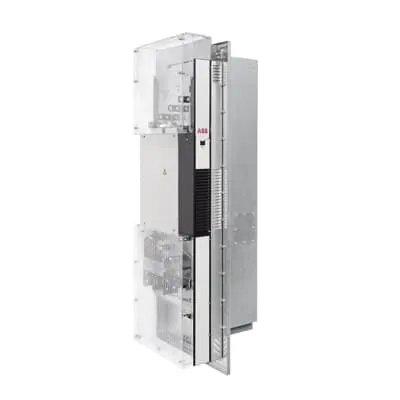
3AXD50000158980 ABB: Flange mounting (push through mounting) version of ACS880-04
Feature: Flange-mounted design enables through-mounting in compact installations. Business Impact: Reduces cabinet space, simplifies mechanical integration, and lowers installation time. Application: Suitable for space-constrained production lines and retrofit projects where footprint is a constraint. Feature: High power capability at 630 kW, 650 A, 690 V (IEC). Business Impact: Delivers strong torque, improved process stability, and energy efficiency for demanding loads. Application: Heavy-duty conveyors, pumps, and extrusion lines requiring robust drive performance. Feature: UL Pld 700 HP rating. Business Impact: Ensures compliance with US safety standards, easing procurement and installation in North American facilities. Application: New builds and expansions in plants with strict electrical compliance. Feature: ACS880-04F-650A-7 compatibility. Business Impact: Streamlines integration with existing ABB drive ecosystems, reducing engineering time and risk. Application: Upgrades, retrofits, and modular automation deployments. Feature: Reliability and diagnostics via ABB drive technology. Business Impact: Improves uptime, enables proactive maintenance, and lowers total cost of ownership. Application: Industrial automation environments with continuous operation demands.
Get a Quick Quote for a ABB 3AXD50000158980
Chat with us on WhatsApp - fast responses guaranteed
Need to speak with someone? We'll call you back within 2 hours during business hours
Interested in ABB 3AXD50000158980?
Enquire Now
FAQs
This drive module is designed as a flange-mounted extension of the ACS880 family, ensuring mechanical and electrical compatibility with ACS880-04F platforms. Retrofit projects benefit from a familiar wiring topology and shared control interfaces, reducing engineering time and commissioning risk while preserving existing PLC and HMI integrations.
Key specs include 630 kW power rating with 650 A current at 690 V, and UL rating corresponding to Pld 700 HP. These ratings deliver high torque and precise speed control for demanding industrial loads, while enabling reliable operation across typical manufacturing environments.
Yes. The 630 kW, 690 V (IEC) footprint supports heavy-duty conveyors, pump systems, and extrusion drives. Its flange-mounted design plus compatibility with ACS880-04F enables compact installations and consistent torque ramping, which translates to improved line throughput and reduced process variability in continuous production lines.
The module carries UL-rated performance (e.g., Pld 700 HP) for US market compliance, and it aligns with IEC voltage standards (690 V) for international use. When pairing with existing safety programs, ensure standard electrical clearances, enclosure ratings, and wiring practices meet local electrical codes and plant safety policies.
Expect reduced downtime due to ABB reliability, easier maintenance with familiar ACS880 interfaces, and lower total cost of ownership from a compact footprint and streamlined installation. The integrated diagnostics help schedule proactive maintenance, minimize unplanned outages, and optimize energy consumption across high-demand motors.