
ABB 3AXD50000529636 ACS880 Drive - CE Certified
Part Number: 3AXD50000529636
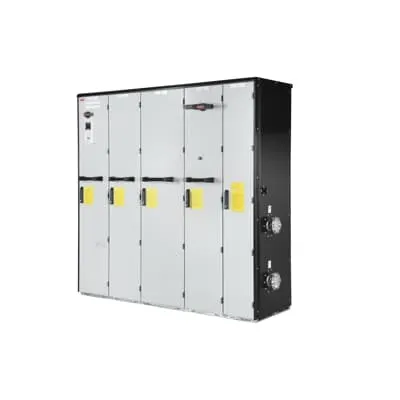
Quick Summary
ABB ACS880 drive provides precise motor control for industrial automation in packaging and process lines. Engineers often wrestle with slow commissioning, tuning complexity, and energy-inefficient motor operation. This solution emphasizes CE compliance and safety features that support regulatory alignment while reducing risk. It also offers seamless integration with ABB drives, scalable performance, and straightforward installation that lowers total cost of ownership. For teams pursuing uptime, efficiency, and predictable maintenance, this option fits neatly into modern digital automation strategies and complements existing control architectures without demanding extensive rework. Its diagnostics and configuration tools also help technicians validate performance quickly. This accelerates project timelines and reduces commissioning risk.
Product Information
Feature: Advanced motor control algorithms including vector control and sensorless feedback. Business Impact: Delivers precise torque, smoother starts and stops, and reduced energy use. Application: Works well for conveyors, spindles, and automation loops. Feature: Easy commissioning and parameterization. Business Impact: Shorter setup times, fewer commissioning errors, faster time-to-production. Application: Startups on packaging lines and CNC machines. Feature: Modular design and installation compatibility. Business Impact: Easier retrofits and scalable deployment across multiple lines. Application: Shop floors with mixed ABB components. Feature: Built-in safety features and CE compliance. Business Impact: Regulatory alignment, protected personnel, reduced risk. Application: Any automated line with compliance requirements. Feature: Remote diagnostics and integration. Business Impact: Proactive maintenance, reduced unplanned downtime, easier reporting. Application: Digital factories, condition monitoring. The combined effect is a robust, scalable solution that reduces maintenance overhead and accelerates time-to-value while supporting industry best practices in automation.
Get a Quick Quote for a ABB 3AXD50000529636
Chat with us on WhatsApp - fast responses guaranteed
Need to speak with someone? We'll call you back within 2 hours during business hours
Interested in ABB 3AXD50000529636?
Enquire Now
FAQs
This drive follows standard ACS880 installation guidelines: mount on a rigid panel with adequate ventilation, and connect to a suitable AC power supply within the device rating. Use the ABB control interfaces and fieldbus options supported by the ACS880 family, and ensure common grounding for control signals and motor feedback. Commissioning uses preset templates to align with the motor nameplate.
It provides precise speed and torque control, smooth ramping, and robust fault detection, improving repeatability and reducing wear. In packaging lines, this reduces belt tension fluctuations and product damage; in CNC setups, it sharpens spindle startup/shutdown and keeps tolerances. This translates to fewer scrap parts, easier process control, and lower operator training needs.
Yes, the model is designed for precise speed/torque control across demanding automation tasks. In packaging, it stabilizes line speed and product handling; in CNC, it provides smooth spindle control; in process industries, it maintains consistent flow and torque on conveyors. Its ABB drive ecosystem compatibility ensures easy integration with PLCs, HMI, and SCADA, reducing integration risk.
The ABB ACS880 family is CE marked for European safety and EMC requirements, aligning with applicable directives. The product documentation accompanying model ACS880-07LC-3260A-7+A004 emphasizes standard safety features, protective enclosures, and functional safety concepts common to ABB drives. For other regulatory regimes (UL, FCC), consult the datasheet and local compliance requirements. Customers should confirm country-specific certifications prior to installation to ensure full regulatory compliance.
Deployment yields lower maintenance through built-in fault detection, remote diagnostics, and durable components. Regular maintenance focuses on firmware updates, filter checks, and connector integrity. ROI is driven by reduced downtime, improved process stability, and energy efficiency, with faster commissioning reducing project costs. For operations, plan preventive checks every 6-12 months and leverage remote monitoring to catch anomalies early.