
ABB 7GSP006452R0006 TEY MCCB - No certification needed
Part Number: 7GSP006452R0006
Quick Summary
TEY MCCB by ABB provides reliable overcurrent protection for industrial control panels and lighting/emergency systems. Engineers often wrestle with mismatched protection devices and lengthy certification trails that delay projects. This model ships with CCC and UKCA declarations indicating no additional certification is required, and it carries a WEEE designation as Product Not in WEEE Scope. For automation projects, this MCCB complements ABB’s TEY family while delivering compact installation and straightforward procurement, contributing to reduced panel footprint and faster commissioning. The result is robust motor protection with practical installability for modern industrial environments.
Product Information
Extended Description
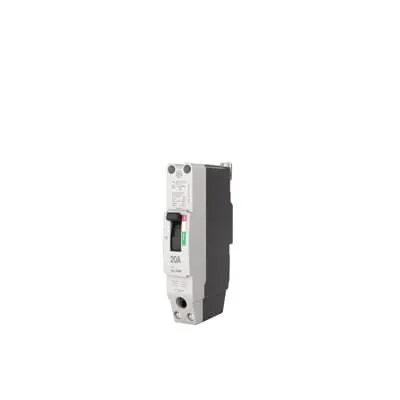
7GSP006452R0006 ABB: TEYL 2 POLE 20A BRKR XPORT MKD
Product Main Type
TEY MCCB
Product Name
TEY MCCB
Declaration of Conformity - CCC
No certification needed
Declaration of Conformity - UKCA
No certification needed
UNSPSC
39121616
WEEE Category
Product Not in WEEE Scope
Feature: Two-pole 20A TEY MCCB design. Business Impact: Delivers precise overcurrent protection with a compact footprint, reducing nuisance trips and enabling safer operation of motors and feeders. Application: Ideal for control panels in factory automation and lighting/emergency systems, where space is at a premium. Feature: Clear conformity declarations (CCC, UKCA) indicating no extra certification needed. Business Impact: Lowers compliance overhead and speeds up panel assembly, especially in regions with evolving regulatory landscapes. Application: Suitable for rapid deployment in mixed markets and retrofit projects. Feature: ABB TEY family compatibility and standard MCCB form factor. Business Impact: Simplifies retrofits and spare-part sourcing, shortening maintenance windows and improving uptime. Application: Fits common DIN rail installations in industrial cabinets and power distribution boards. Feature: WEEE and UNSPSC classifications. Business Impact: Supports sustainable disposal planning and accurate procurement taxonomy, reducing end-of-life risk. Application: Aligns with corporate environmental goals and ERP/materials management workflows. Feature: 2P configuration with standard wiring practices. Business Impact: Enhances safety during installation and service, enabling quicker pour-in wiring and safer disconnections. Application: Widely applicable across automation panels and motor control schemes in factories and infrastructure.
Get a Quick Quote for a ABB 7GSP006452R0006
Chat with us on WhatsApp - fast responses guaranteed
Need to speak with someone? We'll call you back within 2 hours during business hours
Interested in ABB 7GSP006452R0006?
Enquire Now
FAQs
Yes, the ABB TEY MCCB is a two-pole unit designed to fit standard MCCB footprints, enabling straightforward retrofits in many control panels. It supports typical wiring schemes and DIN rail mounting used in industrial automation environments, helping minimize panel modification and downtime during replacement.
The device is a two-pole molded case circuit breaker rated at 20A. The model is 7GSP006452R0006, classified under UNSPSC 39121616 with WEEE status 'Product Not in WEEE Scope'. Declarations indicate CCC and UKCA are not required for this part, simplifying compliance in several regions.
Yes. The TEY MCCB design provides reliable overcurrent protection for circuits feeding lighting and emergency systems, helping prevent damage to drivers, lamps, and control gear while enabling quick disconnection during fault conditions.
The product documentation notes no additional certification is required beyond CCC and UKCA declarations, and it is categorized as WEEE not in scope. This reduces regulatory overhead for panel builders and procurement teams handling projects across multiple markets.
Choosing this ABB TEY MCCB provides robust overcurrent protection with a compact form factor, lowers compliance overhead, and accelerates panel assembly due to familiar footprints. This translates to faster time-to-production, easier maintenance, and reduced total cost of ownership in automation and motor-control applications.