
ABB 7GSP029430R0006 Motor Starters - 463L Contactor
Part Number: 7GSP029430R0006
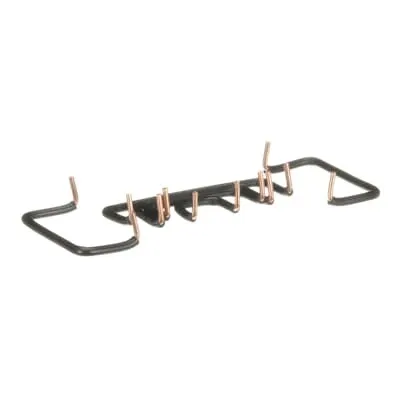
Quick Summary
ABB 7GSP029430R0006 Lighting Contactor enables reliable motor control in industrial automation panels. Engineers often battle premature contact wear, arcing, and cramped wiring spaces that slow commissioning. REACH information indicates no substances above 0.1 mass percent, while the WEEE category is Product Not in WEEE Scope and the UNSPSC code is 25173900. This combination delivers lifecycle value in control panels and machinery, supporting efficient maintenance, faster startups, and streamlined procurement. In practice, this translates to lower downtime and predictable performance across industrial automation workflows. For procurement teams and engineers, the ABB 7GSP029430R0006 reinforces reliability and simplifies integration into existing control architectures.
Product Information
Extended Description
7GSP029430R0006 ABB: 463L40AJD22A0 463L Lighting Contactor
REACH Information
False - does not contain substances > 0.1 mass percentage
Product Net Width
12 in
Product Net Height
6.5 in
Product Net Weight
9.08 lb
WEEE Category
Product Not in WEEE Scope
UNSPSC
25173900
Feature: The 463L lighting contactor design delivers robust switching for motor loads. Benefit: Reduces wear and extends contact life, increasing uptime in high-cycle applications. Application: Ideal for motor control duties in conveyors, pumps, fans, and other automation equipment within control panels. Feature: Dimensional footprint and weight—Product Net Width 12 in, Product Net Height 6.5 in, Product Net Weight 9.08 lb. Benefit: Facilitates panel layout planning, easier mounting, and predictable enclosure thermal management. Application: Suitable for standard industrial control panels and machine mounts where space is a constraint but reliability is critical. Feature: Material compliance and regulatory context—REACH Information shows no substances above 0.1 mass percent; WEEE Category states Product Not in WEEE Scope; UNSPSC 25173900. Benefit: Supports safer sourcing, sustainability reporting, and streamlined procurement audits. Application: Aligns with corporate compliance goals and supplier qualification processes. Feature: General compatibility and installation advantage—built as a Lighting Contactor within ABB’s motor starter family. Benefit: Facilitates straightforward wiring schemes and faster commissioning. Application: Useful for new line builds and panel retrofits where standardization reduces training time and error rates.
Get a Quick Quote for a ABB 7GSP029430R0006
Chat with us on WhatsApp - fast responses guaranteed
Need to speak with someone? We'll call you back within 2 hours during business hours
Interested in ABB 7GSP029430R0006?
Enquire Now
FAQs
Begin with a panel layout that accommodates a 12 in wide by 6.5 in high device. Mount the cont actor securely, route wiring per standard motor control practices, and ensure proper clearance for heat dissipation. Use compatible ABB terminal blocks and verify rail or base mounting adequacy to minimize vibration impacts during operation.
This 463L lighting contactor is designed for motor control in industrial automation environments. Typical applications include conveyors, pumps, fans, and other equipment requiring robust switching and reliable lifecycle performance within control panels.
The product includes REACH information indicating no substances above 0.1 mass percent, and the UNSPSC code is 25173900. The WEEE Category notes Product Not in WEEE Scope, assisting with compliance reviews and sustainability reporting.
Key dimensions are Product Net Width: 12 in, Product Net Height: 6.5 in, and Product Net Weight: 9.08 lb. These specs help with enclosure sizing, mounting clearances, and thermal management planning in control panels.
By delivering robust switching for motor loads and a compact, panel-friendly form factor, the 7GSP029430R0006 reduces wear, minimizes wiring complexity, and supports faster commissioning. This combination translates to lower downtime and more predictable maintenance cycles in automated facilities.