
ABB 7GSP029657R0006 Motor Starters - WEEE Not in Scope
Part Number: 7GSP029657R0006
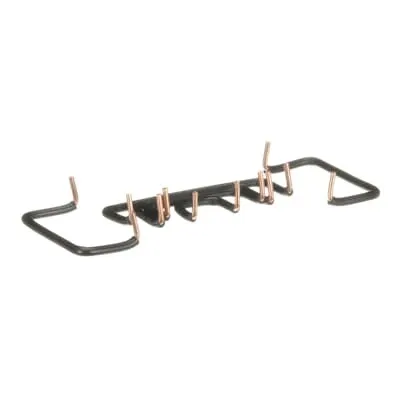
Quick Summary
ABB 7GSP029657R0006 Motor Starters is a compact combo starter for reliable motor control in industrial machinery. Engineers often contend with downtime from ill-fitting starters and tangled wiring that slow line throughput. This unit aligns with external classifications such as WEEE Category: Product Not in Scope and UNSPSC 25173900, helping you stay compliant and purchase efficiently. By reducing panel space and inventory complexity, it delivers measurable value to maintenance schedules and procurement workflows.
Product Information
WEEE Category
Product Not in WEEE Scope
UNSPSC
25173900
Feature → Business Impact → Application: The compact design of the 487 Combo Starter reduces panel space and wiring harness complexity, accelerating initial installation and simplifying service calls in tight control panels on packaging lines and assembly equipment. This translates to lower labor costs and faster downtime recovery, especially for high-mix, low-volume production environments. Feature → Business Impact → Application: Integrated control and protection reduce parts count and streamline fault diagnosis, delivering quicker root-cause analysis for conveyors, pumps, and fans in industrial plants. This supports higher overall equipment effectiveness (OEE) and easier maintenance planning. Feature → Business Impact → Application: Clear WEEE Category and UNSPSC classifications (Product Not in Scope; 25173900) enhance regulatory compliance and procurement accuracy across global supply chains. This reduces mis-picks and accelerates vendor onboarding. Feature → Business Impact → Application: ABB’s motor-control lineage provides reliability and familiar operation, lowering training time and enabling smoother upgrades within existing control architectures at manufacturing facilities. Feature → Business Impact → Application: The combination starter approach simplifies wiring standards and cabinet layouts, enabling faster retrofit projects and modular automation expansions in food & beverage, automotive, and packaging applications. Feature → Business Impact → Application: Industry trend toward modular, plug-and-play starters is supported by this unit, helping teams shorten project timelines and reduce total cost of ownership through fewer spare-part SKUs.
Get a Quick Quote for a ABB 7GSP029657R0006
Chat with us on WhatsApp - fast responses guaranteed
Need to speak with someone? We'll call you back within 2 hours during business hours
Interested in ABB 7GSP029657R0006?
Enquire Now
FAQs
For new installs or retrofits, plan for the compact footprint of the 487 Combo Starter to maximize panel space. Verify wire routing aligns with standard motor starter practices, and ensure there is adequate clearance for heat dissipation. The unit’s integrated design simplifies wiring, reducing panel complexity and commissioning time.
The provided data identifies WEEE Category as Product Not in Scope and UNSPSC as 25173900, situating the unit within ABB’s motor starter family. Specific voltage, current, and overload parameters should be consulted in the official datasheet, but the combo starter’s integration typically supports standard industrial motor control circuits with streamlined wiring.
Yes. The 487 Combo Starter is designed for common motor-control tasks in industrial manufacturing, including conveyors and pumps. Its compact form factor and integrated protection help maintain consistent startup performance, reduce wiring complexity, and support quick replacements or upgrades in line with existing ABB or compatible control architectures.
The data provided lists WEEE categorization and UNSPSC code but does not specify CE or IP ratings. For regulatory conformance and environmental compliance, refer to the full datasheet or contact ABB sales for documented certifications and operating conditions before specifying in a regulated application.
The integrated design reduces the number of separate components, lowering spare-parts inventory and maintenance complexity. This leads to faster fault isolation, shorter downtime during startups or servicing, and a lower total cost of ownership for automation projects in batch and high-availability environments.