
ABB 7GSP032037R0006 MCCB - 600A Frame 3-Pole Trip
Part Number: 7GSP032037R0006
Quick Summary
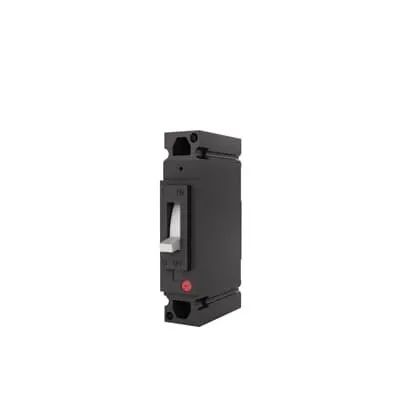
ABB MCCB 7GSP032037R0006 is a high-current circuit protector designed for HVAC control panels and industrial equipment. Engineers often face trade-offs between space, reliability, and downtime when selecting protective devices, and a trip-only MCCB helps simplify wiring and maintenance. This model uses a 600-amp frame with a three-pole trip to deliver fast, predictable disconnection under overloads. While datasheet data here emphasizes core J MCCB classification and the TJK636T400 naming, practitioners should consider common compliance expectations such as CE marking and IP-rated enclosures to support safe operation in challenging environments. In practice, this ABB solution reduces risk, supports faster commissioning, and provides a scalable path for panel designers and maintenance teams alike.
Product Information
Customs Tariff Number
8536200020
Product Main Type
CORE J MCCB
Product Name
TJK636T400
UNSPSC
39121616
WEEE Category
Product Not in WEEE Scope
Feature: 600A frame with a three-pole trip provides robust fault protection for large HVAC loads. Business Impact: minimizes equipment damage and unplanned downtime while enabling precise coordination with upstream protection devices. Application: protective main feeders in HVAC control panels and process cooling systems. Feature: Trip-only design simplifies protection schemes and reduces nuisance trips, lowering maintenance overhead and sparing technicians from unnecessary resets. Business Impact: faster fault diagnosis and improved system uptime. Application: critical drives and motor-control circuits in busy industrial environments. Feature: Core J MCCB classification ensures compatibility with ABB protection families, delivering consistent performance across motor feeders and switchgear. Business Impact: streamlined procurement, faster commissioning, and scalable protection across multiple panels. Application: modular HVAC installations and retrofit projects with standardized ABB components. Feature: External classifications and standards data, including UNSPSC 39121616, aid procurement accuracy and ERP alignment. Business Impact: improved supplier cataloging and faster sourcing. Application: enterprise-wide procurement for large facilities and manufacturers. Feature: WEEE Category notes Product Not in WEEE Scope, simplifying end-of-life planning for facility managers. Business Impact: reduces disposal complexity and aligns with sustainability workflows. Application: panel assemblies destined for regions with strict e-waste regulations.
Get a Quick Quote for a ABB 7GSP032037R0006
Chat with us on WhatsApp - fast responses guaranteed
Need to speak with someone? We'll call you back within 2 hours during business hours
Interested in ABB 7GSP032037R0006?
Enquire Now
FAQs
This ABB MCCB is designed for HVAC control panels and industrial equipment that require strong protection for large loads. With a 600A frame and 3-pole trip, it supports main feeders and motor protection in compact enclosures, helping minimize downtime and protect critical HVAC components from overloads.
The 600A frame accommodates high-current applications, while the 3-pole trip ensures synchronized disconnection across all phases. This reduces coordination errors, improves fault clarity, and lowers the risk of cascading faults in motor feeders and HVAC drives, contributing to higher overall system reliability.
Yes. Classified as a CORE J MCCB, the 7GSP032037R0006 is designed for easy integration within ABB’s MCCB ecosystem and common control-panel architectures. Its documented model naming (TJK636T400) supports straightforward procurement, stocking, and panel design without bespoke protection devices.
In HVAC deployments, ensure the device fits your regional CE requirements and enclosure protection needs. While the data notes WEEE scope, verify local regulations for CE marking, IP ratings, and compliant panel design to guard against dust and moisture in pointed HVAC environments.
The trip-only design simplifies maintenance by reducing adjustable components, leading to quicker diagnostics and fewer field adjustments. Over time, this translates to lower labor costs, shorter downtime during fault events, and a clear path to scale protection across multiple HVAC panels with consistent performance.