
Eaton Crouse-Hinds DSD948 J3 T2 - NEC/CEC Hazardous
Part Number: DSD948 J3 T2
Quick Summary
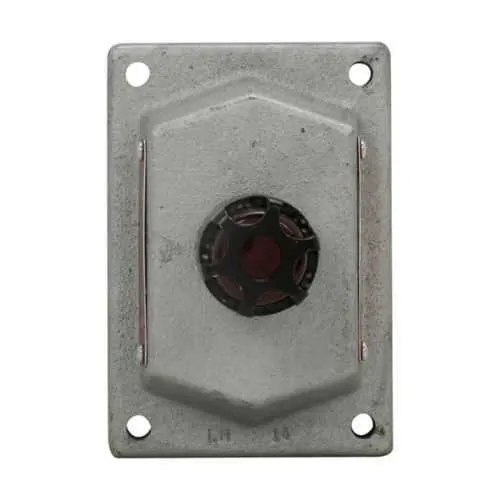
DSD948 J3 T2 is a pilot light cover and device sub-assembly for hazardous-area control stations. In harsh industrial environments, sealing failures, corrosion, and field wiring errors drive unplanned downtime and safety risk. This unit delivers NEC/CEC compliance and a NEMA 7/9/3 rating, supporting reliable operation in Class I, II, and III locations. The green housing and factory-sealed transformer simplify installation and maintenance, while 220-240 Vac compatibility aligns with common control-system standards. Leveraging this solution reduces maintenance costs, accelerates commissioning, and improves safety in process plants, oil & gas facilities, and marine/offshore applications.
Product Information
Extended Description
DSD948 J3 T2 Eaton Crouse-Hinds: Eaton Crouse-Hinds series DSD pilot light cover and device sub-assembly, Green, Feraloy iron alloy, Transformer, factory sealed, One pilot light, 220-240 Vac
Product Name
Eaton Crouse-Hinds series DSD pilot light cover and device sub-assembly
Catalog Number
DSD948 J3 T2
Product Weight
3.4 lb
UPC
782274776712
Area classification
Hazardous/Classified Locations
Standards type
NEC/CEC
NEC hazardous rating
Class II, Division 2 Class I, Division 2 Class I, Division 1 Class II, Division 1 Class III
NEMA Rating
7 9 3
Voltage rating
220-240 Vac
Color
Green
Material
Feraloy iron alloy
Special features
Transformer, factory sealed
Type
One pilot light
DSD and DSDX Cover and Device Sub-assemblies catalog page
DSD Explosionproof Cover and Device Sub-assemblies Canadian certification
DSD Explosionproof Cover and Device Sub-assemblies Canadian certification
IF 899 - EDSX, EDS, EFS, DSDX and DSD Control Stations
IF 899 - EDSX, EDS, EFS, DSDX and DSD Control Stations
IF 899 - EDSX, EDS, EFS, DSDX and DSD Control Stations
Eaton Specification Sheet - DSD948 J3 T2
Feature: Green Feraloy iron alloy housing provides robust corrosion resistance in challenging environments → Business Impact: Extends service life and reduces repainting or replacement costs in hazardous areas → Application: Suitable for offshore platforms and chemical processing plants where exposure to moisture and corrosive atmospheres is common. Feature: Transformer, factory sealed design → Business Impact: Minimizes moisture ingress and field contamination, lowering failure rates and maintenance time → Application: Used in control stations and signaling panels across hazardous locations. Feature: 220-240 Vac voltage rating → Business Impact: Direct compatibility with standard control circuits and minimized wiring changes → Application: Retrofit projects and new installations in industrial plants without special power configuration. Feature: One pilot light indicated signaling → Business Impact: Clear local indication reduces operator search time and improves safety margins → Application: Visual status in hazardous zones, control stations, and emergency panels. Feature: NEC/CEC compliance and NEMA 7/9/3 rating → Business Impact: Regulatory confidence and simplified spec approvals, lowering project risk → Application: Design reviews for oil refineries, chemical facilities, shipyards, and offshore equipment. Feature: 220-240 Vac operation with factory-sealed sub-assembly → Business Impact: Streamlined installation, fewer field modifications, and longer service intervals → Application: New builds and upgrades in hazardous-location control systems. Industry insight: In hazardous location projects, choosing a purpose-built cover and sub-assembly like DSD948 J3 T2 mitigates risk during commissioning and reduces touchpoints for fault-prone field wiring, delivering measurable uptime improvements and a lower total cost of ownership.
Get a Quick Quote for a Eaton Crouse-Hinds DSD948 J3 T2
Chat with us on WhatsApp - fast responses guaranteed
Need to speak with someone? We'll call you back within 2 hours during business hours
Interested in Eaton Crouse-Hinds DSD948 J3 T2?
Enquire Now
FAQs
The DSD948 J3 T2 is designed for straightforward integration into standard hazardous-location control panels operating at 220-240 Vac. Ensure the enclosure is rated for Class I, II, III environments and that wiring conforms to NEC/CEC requirements. The compact sub-assembly simplifies mounting behind the cover, with a factory-sealed transformer to minimize field moisture ingress. Use proper torque on terminal connections and verify pilot-light function with the system powered after installation to confirm signaling reliability.
This unit operates at 220-240 Vac and features a factory-sealed transformer for reliable performance in hazardous locations. Certifications include NEC/CEC compliance and a NEMA rating of 7, 9, and 3, supporting safe operation in Class I, II, and III environments. The area classification is Hazardous/Classified Locations, ensuring conformance with industry safety standards and enabling smoother regulatory approvals during design reviews.
Yes. The green pilot light cover and device sub-assembly are specifically suited for hazardous locations typical of offshore platforms, chemical plants, and other demanding environments. Its corrosion-resistant Feraloy iron alloy housing, combined with a factory-sealed transformer and NEC/CEC compliance, supports long service life, reduced maintenance, and safer signaling in mission-critical control panels in these industries.
The DSD948 J3 T2 carries NEC/CEC standards and a NEMA rating of 7/9/3, aligning with hazardous-location requirements for Class I, II, and III installations. Area classification is Hazardous/Classified Locations, and the unit is designed to meet relevant safety codes, which simplifies regulatory reviews, accelerates procurement, and reduces risk in compliance-heavy projects.
The factory-sealed transformer and rugged feraloy housing minimize moisture ingress and corrosion, lowering field-service frequency. Clear pilot-light signaling reduces operator error and search time during fault conditions. Together with NEC/CEC compliance, these features translate to faster commissioning, predictable maintenance cycles, and a lower overall cost of ownership in hazardous-location control applications.