
Eaton Crouse-Hinds DSD948 J6 LED Pilot Light Cover - Class I
Part Number: DSD948 J6 LED
Manufacturer
Eaton Crouse-Hinds
Part number
DSD948 J6 LED
Category
Quick Summary
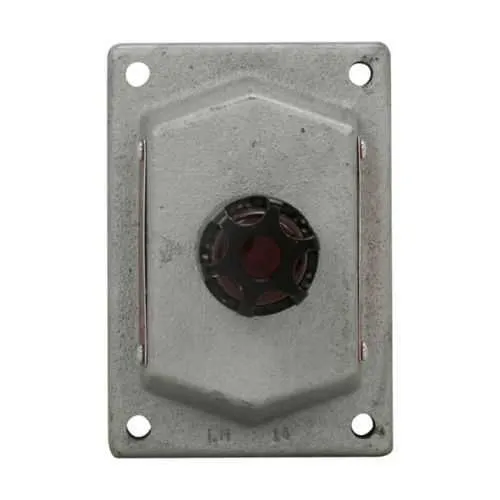
DSD948 J6 LED pilot light cover provides a sealed indicator sub-assembly for hazardous-location control panels and enclosures. In harsh environments with dust, moisture, or explosion hazards, reliable visual indication is essential yet challenging. This unit meets NEC/CEC requirements with Class I, Division 1 and NEMA ratings 3, 7, 9, ensuring safe operation across demanding sites. By pairing an amber LED with a factory-sealed housing, it delivers long life and reduced maintenance while integrating smoothly with existing DSD covers for faster installation and lower total cost of ownership.
Product Information
Extended Description
DSD948 J6 LED Eaton Crouse-Hinds: Eaton Crouse-Hinds series DSD pilot light cover and device sub-assembly, Amber, Feraloy iron alloy, LED, factory sealed, One pilot light
Product Name
Eaton Crouse-Hinds series DSD pilot light cover and device sub-assembly
Catalog Number
DSD948 J6 LED
Product Weight
3.2 lb
UPC
782274043685
Area classification
Hazardous/Classified Locations
Standards type
NEC/CEC
NEC hazardous rating
Class I, Division 1 Class II, Division 1 Class II, Division 2 Class I, Division 2 Class III
NEMA Rating
3 7 9
Color
Amber
Material
Feraloy iron alloy
Special features
LED, factory sealed
Type
One pilot light
DSD and DSDX Cover and Device Sub-assemblies catalog page
DSD Explosionproof Cover and Device Sub-assemblies Canadian certification
DSD Explosionproof Cover and Device Sub-assemblies Canadian certification
IF 1424 - DSD, GFS, CPS and ENR Series Replacement Covers
IF 1424 - DSD, GFS, CPS and ENR Series Replacement Covers
IF 1424 - DSD, GFS, CPS and ENR Series Replacement Covers
Eaton Specification Sheet - DSD948 J6 LED
Amber LED illumination delivers high-contrast indication in bright industrial settings, enabling rapid status recognition and reducing operator error in high-risk zones. This feature translates to safer start-up sequences and improved process reliability in chemical plants and offshore facilities. The Feraloy iron alloy construction provides superior abrasion and corrosion resistance, extending service life in aggressive environments and lowering replacement costs for hazardous-area installations. A factory-sealed design minimizes ingress of dust, moisture, and explosive atmospheres, which reduces maintenance labor and downtime while preserving signal integrity for critical operations. The unit is certified for NEC/CEC compliance with Class I, Division 1, and is rated to NEMA 3, 7, 9, assuring suitability for indoor and outdoor hazardous locations and marine applications. Compatibility with standard DSD cover systems enables quick retrofits and simplified inventory, reducing total cost of ownership. Industry experience shows that LED-based pilot lights offer longer lifecycles and lower energy use compared with traditional incandescent indicators, translating to measurable operating savings and less frequent replacements.
Get a Quick Quote for a Eaton Crouse-Hinds DSD948 J6 LED
Chat with us on WhatsApp - fast responses guaranteed
Need to speak with someone? We'll call you back within 2 hours during business hours
Interested in Eaton Crouse-Hinds DSD948 J6 LED?
Enquire Now
FAQs
DSD948 J6 LED is designed as a cover and device sub-assembly for Eaton Crouse-Hinds DSD systems. It fits standard explosion-proof cover configurations and can be installed using the recommended IF 1424 replacement covers and installation instructions, simplifying retrofits and minimizing field adjustments.
The unit is certified for NEC/CEC standards with Class I, Division 1 (and related divisions), and it carries a NEMA rating of 3, 7, 9, suitable for Hazardous/Classified Locations with robust environmental suitability for marine and industrial settings.
Key specs include an Amber LED, Feraloy iron alloy housing, factory-sealed construction, and a single pilot light configuration designed for reliable status indication in hazardous areas.
Yes. With a factory-sealed design and NEMA 3, 7, 9 ratings, the unit is suitable for indoor and outdoor hazardous locations, including marine applications where exposure to moisture and corrosive atmospheres is a concern.
LED technology provides longer life than incandescent indicators, reducing replacement frequency and maintenance labor. The sealed design protects against contaminants, lowering downtime and supporting compliance in hazardous environments. Overall, this can translate to lower total cost of ownership and improved process uptime.