
Eaton GHG5114306R3001 Hazardous Interlock Receptacle - IP66
Part Number: GHG5114306R3001
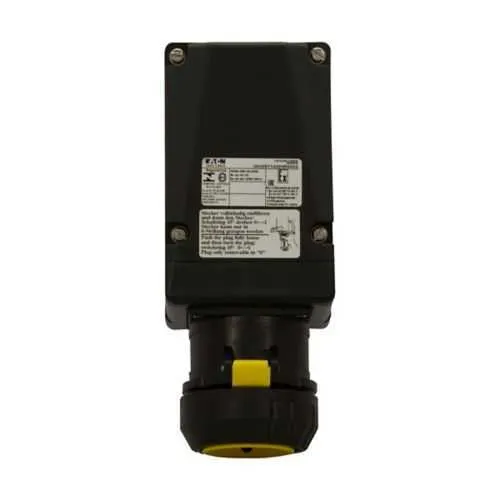
Manufacturer
Eaton Crouse-Hinds
Part number
GHG5114306R3001
Category
Quick Summary
The Eaton GHG5114306R3001 hazardous interlock receptacle provides safe, reliable power interlock for hazardous-area equipment. Engineers often wrestle with wiring in dusty, wet, or corrosive environments where misenergization can trigger costly downtime. This device meets IP66 ingress protection, NEMA 4X enclosure protection, and NEC/CEC IEC safety standards for Class I, Zone 1 and Zone 2 installations, underscoring compliance across multiple jurisdictions. Built with a Nylon body and M20 entry, it supports a 16 A, 220–240 VAC two-wire, three-pole configuration, enabling quick, secure field wiring. The result is safer startups, reduced maintenance interventions, and longer service life for critical process lines, with straightforward compatibility for IEC 60309 systems. This combination supports safer changeovers, audits, and preventive maintenance planning in hazardous process lines.
Product Information
Extended Description
GHG5114306R3001 Eaton Crouse-Hinds: Eaton Crouse-Hinds series IEC 60309 hazardous area interlock receptacle, 16A, Two-wire, three-pole, Nylon, M20, 220-240 Vac
Product Name
Eaton Crouse-Hinds series IEC 60309 hazardous area interlock receptacle
Catalog Number
GHG5114306R3001
Product Length/Depth
4.8 in
Product Height
8.8 in
Product Width
3.5 in
Product Weight
2.3 lb
EAN
4250217426742
Area classification
Hazardous/Classified Locations
Standards type
NEC/CEC IEC
NEC hazardous rating
Class I, Zone 1 Class I, Division 2 Class I, Zone 2
NEMA Rating
4X
Ingress protection (IP) ratings
IP66
Amperage Rating
16 A
Trade size
M20
Configuration
Two-wire, three-pole
Voltage rating
220-240 Vac
Material
Nylon
IEC 60309 Hazardous Area Pin and Sleeve Devices catalog page
Eaton Specification Sheet - GHG5114306R3001
Feature: IEC 60309 hazardous-area interlock design → Business Impact: Ensures a verifiably safe de-energized state and reduces misenergization risk, improving operator safety and compliance. Application: Ideal for IEC 60309 devices and control panels in chemical plants, oil and gas facilities, and other hazardous locations where reliable interlock operation is critical. Feature: 16 A, 220–240 VAC two-wire, three-pole configuration → Business Impact: Supports robust power delivery while minimizing wiring complexity, shortening installation time, and reducing wiring errors. Application: Suitable for compact hazardous-area power feeds in panel enclosures and field-mounted interlock assemblies. This configuration also facilitates rapid testing, straightforward fault isolation, and clear traceability during commissioning and future upgrades. Feature: Nylon body with M20 entry and IP66/NEMA 4X protection → Business Impact: Durable, corrosion-resistant construction that withstands wash-downs and harsh environments, lowering maintenance costs and replacement cycles. Application: Outdoor or wash-down areas where ingress protection maintains reliability of interlock connections. This approach also supports remote diagnostics compatibility and standardized mounting patterns, enabling easier integration with existing safety systems and shared spare parts pools. Feature: Compatibility with IEC 60309 ecosystems and standard hazardous-area components → Business Impact: Simplifies procurement, spare parts management, and cross-vendor maintenance, reducing project risk. Application: Retrofit projects or new builds in petrochemical plants, refineries, and marine facilities seeking consistent safety performance. This approach also helps reduce vendor lock-in and speeds deployment across multiple sites by using common industrial interlock interfaces and standard installation practices. Feature: NEC hazardous ratings coverage (Class I Zone 1/Zone 2; Division 2) and CE/IEC compliance → Business Impact: Facilitates regulatory approvals across jurisdictions, reduces audit risk, and speeds time to deployment. Application: Suitable for multi-site projects and offshore installations requiring verifiable safety certifications and harmonized equipment standards. This enables faster procurement, streamlined compliance audits, and easier ongoing maintenance scheduling across operations.
Get a Quick Quote for a Eaton Crouse-Hinds GHG5114306R3001
Chat with us on WhatsApp - fast responses guaranteed
Need to speak with someone? We'll call you back within 2 hours during business hours
Interested in Eaton Crouse-Hinds GHG5114306R3001?
Enquire Now
FAQs
To install the GHG5114306R3001, mount the receptacle in a compliant enclosure and route wiring through an M20 gland. Use the two-wire, three-pole configuration rated at 16 A and 220–240 VAC, and verify IP66/NEMA 4X protection for harsh environments. Confirm compatibility with IEC 60309 devices and follow NEC/CEC IEC installation guidelines for Class I locations.
Yes; this interlock receptacle carries NEC hazardous ratings for Class I, Zone 1 and Zone 2, plus a robust IP66/NEMA 4X enclosure suitable for harsh environments. It supports 16 A at 220–240 VAC and is designed for two-wire, three-pole configurations in IEC 60309 systems. Always confirm local regulatory approvals and compatibility with existing hazardous-area hardware.
Industries such as oil and gas, chemical processing, refineries, offshore platforms, and mining benefit most from the GHG5114306R3001. It interlocks power to IEC 60309 devices in Class I locations, reduces misenergization risk, and supports safe maintenance. Use in control cabinets, motor starters, and panel assemblies where compliance with NEC/CEC IEC, IP66, and NEMA 4X is essential.
Certified to hazardous-location standards, the GHG5114306R3001 carries Class I Zone 1/Zone 2, NEC hazardous ratings, IP66, and NEMA 4X. These certifications help satisfy regulatory requirements for wiring devices in dangerous environments and simplify auditing. Always verify the specific local approvals for your facility, and pair with compatible IEC 60309 components to maintain compliance.
Maintenance and ROI benefits come from the device's rugged nylon body, IP66/NEMA 4X protection, and straightforward two-wire, three-pole wiring. Regular checks of interlock alignment and gasket integrity prevent mis-lock events, reducing downtime. Over the equipment life cycle, the interlock supports safer starts, faster servicing, and lower total cost of ownership in hazardous-area facilities.