
Eaton LBD6600 Mogul Conduit Body - NEC/CEC
Part Number: LBD6600
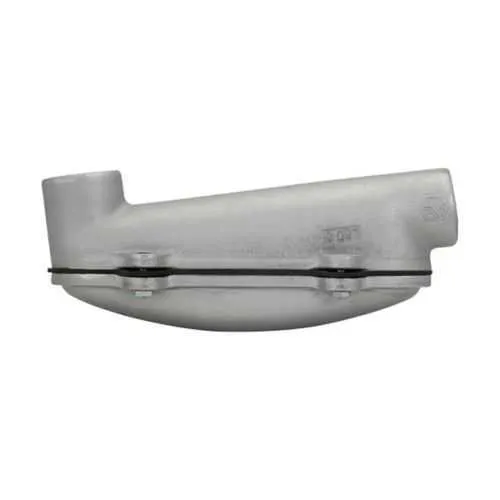
Quick Summary
Eaton LBD6600 mogul conduit body simplifies wiring between conduits in industrial enclosures. In tight spaces, pulling cables and achieving a reliable seal can delay projects. It carries NEC/CEC compliance and UL certification for mogul conduit bodies, with an Ordinary/Non-Hazardous Locations rating. For installers and procurement teams, the 2-inch trade size and rugged Feraloy iron alloy deliver long-term performance and cost efficiency.
Product Information
Extended Description
LBD6600 Eaton Crouse-Hinds: Eaton Crouse-Hinds series Condulet LBD mogul conduit body, Feraloy iron alloy, 2"
Product Name
Eaton Crouse-Hinds series Condulet LBD mogul conduit body
Catalog Number
LBD6600
UPC
782274518602
Product Length/Depth
12.44 in
Product Height
5.44 in
Product Width
4.63 in
Product Weight
10.35 lb
Area classification
Ordinary/Non-Hazardous Locations
Standards type
NEC/CEC
Trade size
2"
Material
Feraloy iron alloy
Crouse-Hinds series LBD and LBNEC Moguls catalog page
Mogul Conduit Bodies and Pulling Elbows UL certification
Mogul Conduit Bodies and Pulling Elbows UL certification
Eaton Specification Sheet - LBD6600
Industrial Fittings Bend Radius and Cubic Capacity Chart
Industrial Fittings Bend Radius and Cubic Capacity Chart
Feature: 2 inch trade size Condulet LBD6600 with Feraloy iron alloy construction. Business Impact: Delivers high strength, impact resistance, and corrosion tolerance, reducing maintenance costs in demanding environments. Application: ideal for long runs and conduit transitions in manufacturing floors, water/wastewater facilities, and industrial control panels. Feature: Precise dimensions—12.44 in length, 5.44 in height, 4.63 in width, and 10.35 lb weight. Business Impact: Enables predictable space planning, easier mounting, and minimized field fitting errors. Application: supports compact enclosure design and clean cable routing with reliable sealing. Feature: NEC/CEC compliance and Ordinary/Non-Hazardous Locations rating. Business Impact: Reduces regulatory risk and downtime from non-compliant fittings. Application: suitable for general industrial facilities and commercial automation deployments. Feature: UL certification for mogul conduit bodies. Business Impact: Strengthens procurement confidence and accelerates audit-ready compliance. Application: suitable for regulated plant environments pursuing standardized conduit fittings. Feature: Access to technical resources including bend radius and cubic capacity guidance. Business Impact: Improves installation planning, reduces miscalculations, and speeds up project timelines. Application: engineers should reference Eaton catalogs and service bulletins during design and installation. Feature: Durable form factor supports service life and future upgrades. Business Impact: Longer intervals between replacements, lower maintenance, and reduced lifecycle costs. Application: retrofits and new builds in heavy-duty automation environments.
Get a Quick Quote for a Eaton Crouse-Hinds LBD6600
Chat with us on WhatsApp - fast responses guaranteed
Need to speak with someone? We'll call you back within 2 hours during business hours
Interested in Eaton Crouse-Hinds LBD6600?
Enquire Now
FAQs
The LBD6600 is designed for ordinary/non-hazardous locations and provides a reliable pull point between conduits in industrial enclosures. Its 2" trade size and Feraloy iron alloy construction deliver durability, better alignment, and fewer field adjustments, reducing project delays and maintenance needs.
Key specs include a 2" trade size, 12.44" length, 5.44" height, 4.63" width, and a weight of 10.35 lb. The body is made from Feraloy iron alloy, supporting rigidity and resistance to impact in harsh industrial settings.
Yes. The LBD6600 is NEC/CEC compliant and rated for Ordinary/Non-Hazardous Locations. It is UL certified for mogul conduit bodies, providing trusted listings that simplify compliance during inspections and approvals.
Absolutely. With a 2" trade size and compatibility with common conduit fittings, it supports standard pulling practices. Engineers should consult bend radius and cubic capacity charts to optimize installation and avoid overfilling or binding in longer runs.
The LBD6600 reduces installation time, minimizes field rework, and lowers lifecycle costs through durable materials and regulatory compliance. It enables reliable conduit transitions in automation panels and factory floors, supporting faster project delivery and longer service intervals.