
Eaton LTB150GC Liquidator - Hazardous Locations Certified
Part Number: LTB150GC
Quick Summary
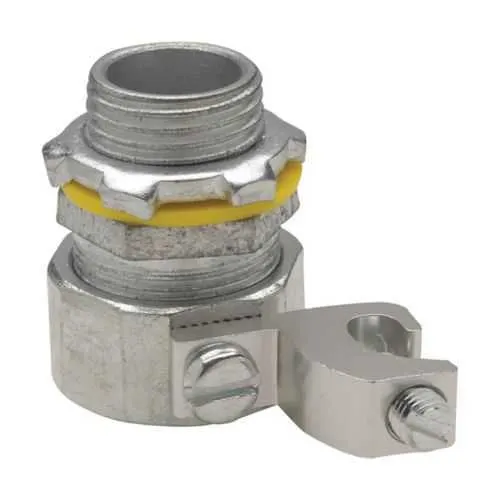
The Eaton Crouse-Hinds LTB150GC Liquidator provides reliable FMC liquidtight connections for hazardous-location installations. End users often struggle with maintaining ground continuity and code-compliant fittings in harsh, moisture-prone environments. This connector delivers NEC/CEC compliance with hazardous-location ratings, including Class I Division 2 and Class II/III, helping minimize compliance risk. With rugged malleable iron construction, insulated grounding, and a 1-1/2 in trade size, it supports reliable, scalable industrial installations. Access to CAD drawings and catalog pages supports faster design-in and procurement decisions. This combination of rugged build and compliance helps reduce maintenance cycles and downtime in critical process lines. Designed for retrofit projects and new installs alike, it aligns with industry best practices for hazardous-locations equipment.
Product Information
Extended Description
LTB150GC Eaton Crouse-Hinds: Eaton Crouse-Hinds series Liquidator liquidtight connector, FMC, Straight, Copper ground lug, Insulated, #4-14 AWG lug size, Malleable iron, 1-1/2"
Product Name
Eaton Crouse-Hinds series Liquidator liquidtight connector
Catalog Number
LTB150GC
UPC
784564253057
Product Length/Depth
2.38 in
Product Height
3.19 in
Product Width
2.44 in
Product Weight
0.85 lb
Area classification
Hazardous/Classified Locations
Standards type
NEC/CEC
NEC hazardous rating
Class I, Division 2 Class II, Division 1 Class II, Division 2 Class III
Conduit type
FMC
Connector type
Straight
Material
Malleable iron
Insulator
Insulated
Trade size
1-1/2"
Ground lug material
Copper
Lug size
#4-14 AWG
Eaton Crouse-Hinds LTB150GC 3D drawing
Crouse-Hinds series Malleable and Aluminum Liquidtight Fittings catalog page
Metallic Liquidtight Fittings Canadian certification
Metallic Liquidtight Fittings Canadian certification
Eaton Specification Sheet - LTB150GC
Paragraph 1: Rugged malleable iron housing delivers robust mechanical protection for liquidtight fittings in demanding environments. The LTB150GC’s insulated body and solid construction translate to fewer field failures and lower maintenance costs, especially in areas with vibration, dust, or moisture. In chemical processing, metal refining, and hazardous facilities, this strength means longer service intervals and safer operations for critical equipment and processes. Paragraph 2: Copper ground lug assures dependable grounding continuity across fittings and panels, while the #4-14 AWG lug range accommodates common feeders and branch circuits. The insulation and grounded path design minimize impedance and EMI concerns, improving safety and helping meet NEC/CEC requirements. This combination supports reliable fault clearance and reduces grounding-related faults in critical systems. Paragraph 3: FMC straight-conduit compatibility and straightforward assembly speed installation during wiring and commissioning. The straight configuration minimizes alignment challenges in tight spaces, and an insulated body resists moisture ingress. When paired with available 3D CAD drawings and catalog pages, design teams can verify fit before procurement, shortening project timelines and reducing costly design changes. Paragraph 4: Hazardous-location readiness is reinforced by NEC/CEC compliance and explicit Class I Division 2, Class II Division 1–2, and Class III ratings. Area classification is listed as Hazardous/Classified Locations, giving engineers a clear basis for selecting fittings that meet regulatory requirements and protection levels. Paragraph 5: Lifecycle and compatibility: supports 1-1/2 inch trade size and integrates with other Eaton Crouse-Hinds liquidtight fittings for streamlined splicing and enclosure design. The connector’s weight and dimensions support space-constrained installations, while documentation such as 3D CAD packages and catalogs facilitate accurate BOM generation and faster procurement.
Get a Quick Quote for a Eaton Crouse-Hinds LTB150GC
Chat with us on WhatsApp - fast responses guaranteed
Need to speak with someone? We'll call you back within 2 hours during business hours
Interested in Eaton Crouse-Hinds LTB150GC?
Enquire Now
FAQs
LTB150GC is designed for direct FMC conduit connections in hazardous locations. It features a straight configuration, malleable iron body, insulated construction, copper ground lug, and a 1-1/2 inch trade size. This combination simplifies field assembly, reduces misalignment risk, and ensures reliable grounding, which is critical for safety and equipment protection in Class I and II environments.
LTB150GC carries NEC/CEC compliance and explicit hazardous-location ratings including Class I Division 2, Class II Divisions 1–2, and Class III. Its FMC conduit compatibility, copper grounding, and insulated malleable-iron housing help maintain enclosure integrity, prevent moisture intrusion, and support proper equipment protection. These specs help meet regulatory requirements and reduce project risk in mining, chemical processing, and oil-and-gas facilities.
Yes. The LTB150GC is rated for 1-1/2 inch trade size, with a copper ground lug and malleable iron body designed for corrosive or dusty environments common in oil, gas, and petrochemical plants. Its straight FMC connector configuration supports clean, reliable terminations in tight spaces, while the insulated body minimizes moisture ingress and helps maintain electrical integrity under dynamic operating conditions.
Compliance centers on NEC/CEC standards for hazardous locations. The LTB150GC carries Class I, Division 2 and Class II, Division 1 and 2, plus Class III ratings, aligned with NEC hazardous ratings and area classification of Hazardous/Classified Locations. This ensures the connector is permitted for use in regulated zones, reducing engineering review time and facilitating smoother approvals.
Using the LTB150GC delivers lifecycle advantages that translate to tangible ROI. Its rugged malleable-iron construction and insulated design resist moisture and vibration, reducing replacement frequency and downtime. A copper ground lug maintains consistent grounding, lowering fault-related outages. Access to CAD drawings and catalog pages also speeds design-in, procurement, and field service planning, boosting overall project efficiency.