
Eaton LTQB200 LiQuik Liquidtight Connector - Class I, Div 2
Part Number: LTQB200
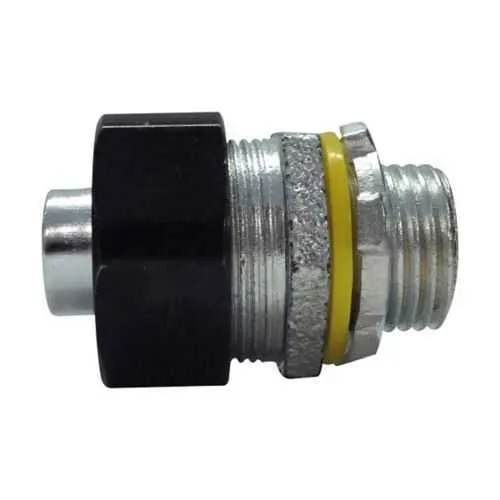
Quick Summary
LTQB200 LiQuik liquidtight connector provides dependable FMC conduit sealing for hazardous locations in industrial enclosures. Installing in classified areas often triggers costly rework and lengthy approvals—this connector helps streamline that process. It is NEC/CEC compliant and UL-listed for Class I, Division 2 hazards, with additional ratings for other classifications. For OEMs and maintenance teams, LTQB200 delivers durable malleable-iron construction and insulated protection, easing installation in harsh environments while ensuring ongoing compliance and reliability.
Product Information
Extended Description
LTQB200 Eaton Crouse-Hinds: Eaton Crouse-Hinds series LiQuik LTQ liquidtight connector, FMC, Straight, Insulated, Malleable iron, 2"
Product Name
Eaton Crouse-Hinds series LiQuik LTQ liquidtight connector
Catalog Number
LTQB200
UPC
662277000246
Product Length/Depth
2.56 in
Product Height
3 in
Product Width
3 in
Product Weight
1.1 lb
Area classification
Hazardous/Classified Locations
Standards type
NEC/CEC
NEC hazardous rating
Class I, Division 2 Class II, Division 1 Class II, Division 2 Class III
Conduit type
FMC
Connector type
Straight
Material
Malleable iron
Insulator
Insulated
Trade size
2"
Crouse-Hinds series LiQuik No Disassembly Liquidtight Fittings catalog page
LiQuik No Disassembly Liquidtight Fittings UL certification
LiQuik No Disassembly Liquidtight Fittings UL certification
Eaton Specification Sheet - LTQB200
Feature: Straight FMC liquidtight connector with 2 in trade size. Business impact: Enables direct runs with minimal fittings, reducing install time and material costs. Application: Control panels and equipment enclosures in hazardous zones. Feature: Malleable iron, insulated body. Business impact: Provides rugged mechanical protection and thermal resistance, lowering corrosion risk and extending service life. Application: Chemical plants and outdoor installations. Feature: NEC/CEC compliance and UL hazardous-location ratings. Business impact: Streamlines approvals and reduces compliance risk, accelerating project schedules. Application: OEM manufacturing and retrofit projects in Class I, II, III locations. Feature: Area classification readiness and compatibility with LiQuik fittings. Business impact: Enhances safety documentation and system integrity, cutting maintenance time. Application: Classified locations in industrial facilities. Feature: Compact dimensions—2.56 in length, 3 in height, 3 in width—and 1.1 lb weight. Business impact: Simplifies space planning and transport on job sites, improving installation speed. Application: Field installations with tight spaces in FMC conduit runs.
Get a Quick Quote for a Eaton Crouse-Hinds LTQB200
Chat with us on WhatsApp - fast responses guaranteed
Need to speak with someone? We'll call you back within 2 hours during business hours
Interested in Eaton Crouse-Hinds LTQB200?
Enquire Now
FAQs
LTQB200 is designed for FMC conduit and is a straight, 2 in trade-size connector with a malleable-iron body and insulated construction. It aligns directly with LiQuik FMC fittings, simplifying runs from enclosures to field devices, reducing installation steps and avoiding improper seals.
LTQB200 carries NEC/CEC compliance and UL listings for hazardous locations, including Class I, Division 2 ratings. This ensures a safe seal and enclosure integrity in classified environments, supporting regulatory approvals and reliable operation.
Yes, LTQB200 is UL-certified for hazardous locations and listed under NEC/CEC standards, supporting compliance in both the United States and Canada. This reduces cross-border certification efforts for multinational projects.
The malleable-iron, insulated body provides robust durability against impact, moisture, and temperature fluctuations. The straight design and 2 in size simplify routing in tight spaces, reducing field rework, speeding panel assembly, and improving long-term reliability in harsh settings.
By reducing installation time, minimizing rework for approvals, and extending service life through rugged construction, LTQB200 lowers total cost of ownership in hazardous locations. The UL/NEC compliance also mitigates regulatory risk, supporting faster project delivery and predictable maintenance schedules.