
Eaton Crouse-Hinds NCD01 Enclosure - Hazardous/Classified Locations
Part Number: NCD01
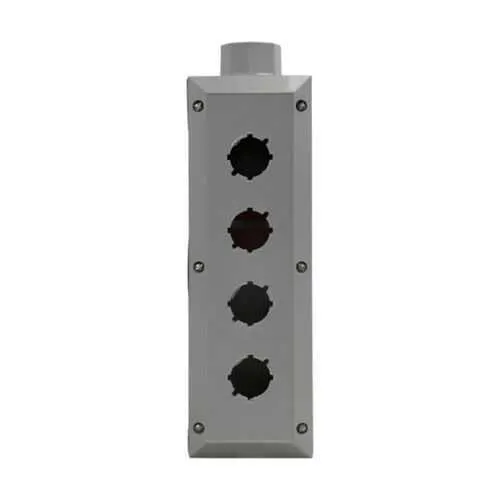
Quick Summary
NCD01 enclosure by Eaton Crouse-Hinds provides rugged protection for hazardous-area control panels. In demanding environments, improper enclosure selection can lead to moisture ingress, corrosion, or equipment downtime. This model carries NEC/CEC standards with Class I, Division 2 certification and a robust NEMA rating of 3, 4X, 7, 12 to cover a wide range of hazardous locations. Its compact size and 1-circuit configuration deliver space efficiency and simplified wiring, while ensuring compliance and safety. Use with MSR1 or MSR2 suffix configurations for seamless installation and predictable performance in OEM panels and field-repairable control stations.
Product Information
Extended Description
NCD01 Eaton Crouse-Hinds: Eaton Crouse-Hinds series NCD enclosure, 1, Must be used with MSR1 or MSR2 suffix, Dead end
Product Name
Eaton Crouse-Hinds series NCD enclosure
Catalog Number
NCD01
UPC
782274592565
Product Length/Depth
3.81 in
Product Height
7.25 in
Product Width
4.38 in
Product Weight
2 lb
Area classification
Hazardous/Classified Locations
Standards type
NEC/CEC
NEC hazardous rating
Class I, Division 2
NEMA Rating
3 4X 7 12
Number of circuits
1
Style
Dead end
Special features
Must be used with MSR1 or MSR2 suffix
N2S and N2SC Series Non-metallic Control Stations catalog page
N2S and N2SC Non-metallic Hazardous Area Control Stations UL certification
N2S and N2SC Non-metallic Hazardous Area Control Stations UL certification
Eaton Specification Sheet - NCD01
Feature → Business Impact → Application: The NCD01 offers a compact footprint (3.81 in L x 7.25 in H x 4.38 in W) and a light 2 lb weight. This enables faster mounting, reduces shipping costs, and minimizes enclosure footprint in tight control cabinets, ideal for small but compliant hazard-rated panels. In practice, facilities gain more usable space and easier field upgrades for existing lines. Feature → Business Impact → Application: NEMA ratings 3, 4X, 7, 12 provide weather resistance, corrosion protection, and explosion-safe performance. This translates to fewer enclosure failures in harsh environments and improved uptime for chemical processing, oil & gas, or outdoor equipment rooms. Application: hazardous locations control panels in demanding plants benefit from long-term reliability and reduced maintenance.
Get a Quick Quote for a Eaton Crouse-Hinds NCD01
Chat with us on WhatsApp - fast responses guaranteed
Need to speak with someone? We'll call you back within 2 hours during business hours
Interested in Eaton Crouse-Hinds NCD01?
Enquire Now
FAQs
The NCD01 is designed for Hazardous/Classified Locations with NEC/CEC compliance and Class I, Division 2 approval. Plan for a dead-end configuration and ensure MSR1 or MSR2 suffix is used for proper interface with compatible control stations. Verify enclosure mounting in a protected area to maximize NEMA 3/4X protection and route cabling to maintain management of ingress protection.
Catalog Number: NCD01; UPC: 782274592565; Product Dimensions: 3.81 in L × 7.25 in H × 4.38 in W; Weight: 2 lb; Number of circuits: 1; Style: Dead end; Special features: Must be used with MSR1 or MSR2 suffix; Certifications: NEC/CEC, Class I Division 2, NEMA 3 4X 7 12.
Yes. The NCD01 is certified for Hazardous/Classified Locations with NEC/CEC standards and a NEC hazardous rating of Class I, Division 2. It also carries a NEMA Rating of 3, 4X, 7, 12, providing protection for both weather and certain explosion-hazard conditions typical in chemical, oil & gas, and other process environments.
The NCD01 must be used with MSR1 or MSR2 suffix to ensure proper compatibility with compatible control-station interfaces. This simplifies field upgrades, enables standardized mounting footprints, and reduces rework when integrating with Eaton Crouse-Hinds MSR suffix systems in hazardous-area control panels.
The NCD01 delivers a compact, rugged enclosure with proven hazardous-location ratings, enabling compliant installations with minimal footprint. It reduces downtime risk through reliable protection, simplifies procurement with a single-circuit, dead-end design, and supports straightforward integration with MSR suffix configurations—delivering faster deployments and lower lifecycle costs.