
Eaton 1740DC Squeeze Type Connector - NEC/CEC
Part Number: 1740DC
Quick Summary
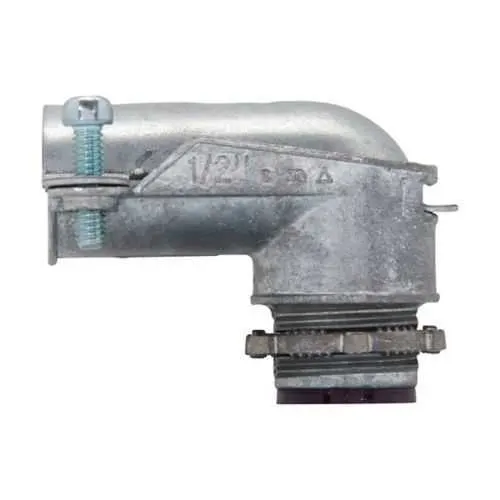
Eaton 1740DC squeeze type connector is used to join FMC conduit in control panels. Installers often struggle with slow wiring, misaligned fittings, and uninsulated terminations in harsh environments. It carries NEC/CEC compliance and is suitable for ordinary/non-hazardous locations, with UL Canada certification supporting cross-border use. This rugged zinc die-cast, insulated 1-1/4" connector delivers fast, secure installations, reducing rework and maintenance for automation projects.
Product Information
Extended Description
1740DC Eaton: Eaton Crouse-Hinds series squeeze type connector, FMC, 90° angle, Insulated, Zinc die cast, 1-1/4"
Product Name
Eaton Crouse-Hinds series squeeze type connector
Catalog Number
1740DC
UPC
784564003690
Product Weight
0.475 lb
Area classification
Ordinary/Non-Hazardous Locations
Standards type
NEC/CEC
Conduit type
FMC
Style
Squeeze
Material
Zinc die cast
Connector type
90° angle
Insulator
Insulated
Trade size
1-1/4"
Crouse-Hinds series Connectors and Couplings - FMC catalog page
Connectors and Couplings - FMC Canadian certification
Connectors and Couplings - FMC Canadian certification
Eaton Specification Sheet - 1740DC
The 1740DC features a 90° squeeze-type design with an insulated zinc die-cast housing. This configuration provides a compact, vibration-resistant elbow connection that maintains conductor integrity in demanding industrial environments, reducing field faults. The result is faster panel wiring, lower labor costs, and fewer callbacks for rework in automation installations involving FMC conduit. The connector’s 1-1/4" trade size supports common feeder sizes, ensuring compatibility with existing FMC ecosystems and minimizing accessory purchases. The insulated design also helps protect conductors from moisture and contaminants, improving long-term reliability in enclosure environments. Engineering teams benefit from predictable installation torque and consistent squeeze performance, which translates to repeatable reliability across large-scale projects. Overall, this connector aligns with industry standards while delivering tangible safety and productivity gains.
Get a Quick Quote for a Eaton 1740DC
Chat with us on WhatsApp - fast responses guaranteed
Need to speak with someone? We'll call you back within 2 hours during business hours
Interested in Eaton 1740DC?
Enquire Now
FAQs
The 1740DC is designed specifically for FMC conduit and uses a 1-1/4 inch trade size, enabling direct alignment with compatible FMC runs. This reduces the need for adapters and simplifies routing in control panels, machine enclosures, and junction boxes. For best results, ensure clean conduit ends and proper seating before squeezing to achieve a secure, compliant connection.
The 1740DC complies with NEC/CEC standards and is rated for Ordinary/Non-Hazardous Locations, delivering safe operation in typical industrial environments. Additional cross-border certification support is indicated by UL Canada listings, which helps validate its use in facilities that require Canadian certification for armored cable and FMC connections.
Yes. The 1740DC features a 90° angle design that enables tight elbow connections in congested panels, behind motors, or along machine frames. This geometry helps streamline wire routing, reduces the need for bending flexible conduit, and minimizes space requirements while maintaining a secure, insulated connection.
The insulated zinc die-cast body provides robust protection against moisture and contaminants, while the squeeze-type mechanism delivers consistent torque for reliable terminations. Together, these features shorten installation time, lower field rework, and extend connector longevity in automation environments where uptime is critical.
By enabling faster, more reliable FMC connections at a common trade size, the 1740DC reduces labor hours during panel wiring and minimizes callouts due to failed terminations. Its NEC/CEC compliance and cross-border UL Canada certification also support multi-site deployments, lowering regulatory risk and improving project economics over the product lifecycle.