
Eaton 6DSL-A600 Cable Limiter - IEEE C37.41 200 kAIC
Part Number: 6DSL-A600
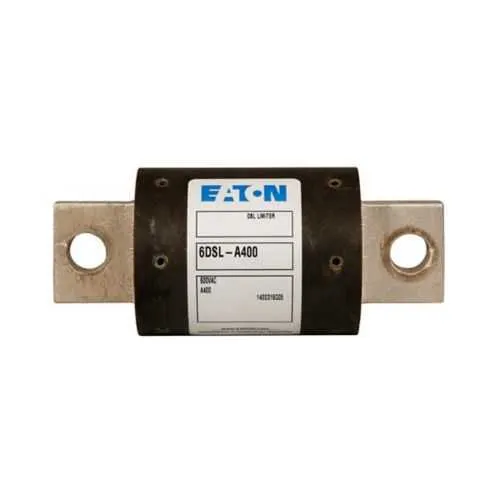
Quick Summary
The Eaton 6DSL-A600 cable limiter protects cables by limiting fault current in low-voltage power feeds. Engineers struggle with arcing, insulation damage, and unplanned downtime from overcurrent events. Certified to IEEE Std. C37.41 with a 200 kAIC interrupt rating, it supports high-reliability deployments in critical power paths. The compact footprint—5.75 in long, 2.5 in high, and 2.5 in wide—facilitates installation in crowded panels and switchgear enclosures. As part of Eaton Bussmann’s low-voltage protection family, it delivers predictable protection in 600 V circuits, enabling faster maintenance, simplified sourcing, and reduced total cost of ownership for OEMs and maintenance teams. This device supports standard mounting and wiring configurations, easing upgrade paths from older fuse or limiter solutions.
Product Information
Extended Description
6DSL-A600 Eaton: Eaton Bussmann series, Low voltage DSL type current limiting fuse, 600A, 600V, 200 kA interrupt
Product Name
Eaton Bussmann series CDC cable limiter
Catalog Number
6DSL-A600
UPC
786670249368
Product Length/Depth
5.75 in
Product Height
2.5 in
Product Width
2.5 in
Product Weight
3.95 lb
Warranty
Eaton Selling Policy 25-000, one (1) year from the date of installation of the Product or eighteen (18) months from the date of shipment of the Product, whichever occurs first.
Certifications
IEEE Std. C37.41
Amperage Rating
600 A
Interrupt rating
200 kAIC
Voltage rating
600 V
Quantity
1
Special features
Cable limiter
High-current protection: 600 A rating and 600 V rating with a 200 kAIC interrupt capacity provide rapid fault current limitation, reducing arc energy, conductor damage, and unplanned downtime. This translates to safer, more reliable power feeds for critical machinery and manufacturing lines, enabling predictable performance even in short-circuit events. The result is longer equipment life and lower maintenance costs in industrial control panels and switchgear. Compact form factor: at 5.75 in length and 2.5 in width/height with a 3.95 lb weight, the device fits densely populated enclosures and facilitates retrofits in legacy Bussmann circuits. OEMs gain faster installation and reduced enclosure mods, accelerating time-to-protect for new lines and upgrades.
Get a Quick Quote for a Eaton 6DSL-A600
Chat with us on WhatsApp - fast responses guaranteed
Need to speak with someone? We'll call you back within 2 hours during business hours
Interested in Eaton 6DSL-A600?
Enquire Now
FAQs
Install the 6DSL-A600 in the low-voltage section of the panel between the feeder and the protected conductors. Ensure proper alignment with mounting provisions, tighten terminals to the recommended torque, and connect per the wiring diagram in the Eaton specification sheet. Verify 600 V ratings are suitable for your bus and verify compatibility with existing Bussmann series protection devices for a consistent protection scheme.
200 kAIC indicates the maximum instantaneous current the device can interrupt without damage. For design, this means the limiter can safely interrupt high-energy fault events typical in industrial feeders, reducing arc flash energy, protecting cables and insulation, and maintaining system integrity during faults.
Yes. The 6DSL-A600 is designed for low-voltage protection in control panels, switchgear, and industrial feeders. Its IEEE C37.41 certification and 600 V rating align with data center and manufacturing safety standards, while its compact footprint simplifies integration into dense enclosures common in these environments.
The device is certified to IEEE Std C37.41, indicating compliance with established overcurrent and protection practice for power fuses and current limiters. This aids in regulatory documentation, risk assessments, and audit readiness when specifying protection in electrical installations and refurbishment projects.
The product carries Eaton’s warranty policy 25-000, offering one year from the date of installation or eighteen months from shipment, whichever comes first. This provides field coverage for replacements, reduces risk in procurement, and supports maintenance planning for OEMs and service teams.