
Eaton KOS6 Edison Fuse - Class K5, 10 kAIC, 600V, CE Marked
Part Number: KOS6
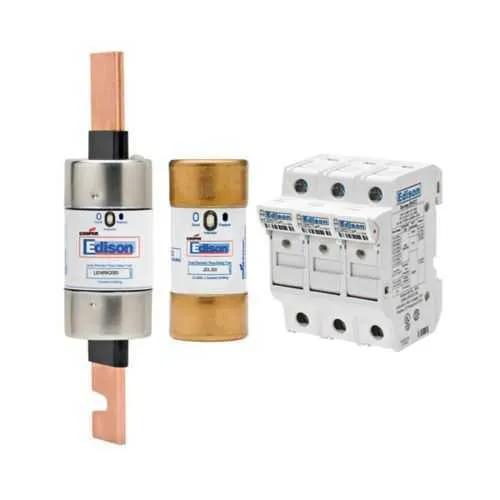
Quick Summary
The Eaton KOS6 Edison fuse protects circuits in industrial control panels with fast-acting overcurrent protection. Engineers often struggle with nuisance trips and coordinating protection across legacy equipment during upgrades. It carries CE marking for compliance and CSA certification status (Not Applicable), aligning with common regulatory expectations for panel protection. The device’s ferrule design and Class K5 construction support reliable, compact protection in 600 V systems, while its standard packaging simplifies stocking and replacement. By choosing KOS6, maintenance teams can reduce downtime, streamline spare-part inventories, and meet safety requirements without over-engineering protection for small-control circuits. This makes KOS6 a practical, cost-conscious choice for OEMs and end users streamlining design reviews and procurement.
Product Information
Extended Description
KOS6 Eaton: Eaton Edison KOS fuse, Ferrule design, 6 A, Class K5, Non-indicating, 10 kAIC, Standard, 10, 600 V
Product Name
Eaton Edison KOS fuse
Catalog Number
KOS6
UPC
782634370062
Product Length/Depth
5 in
Product Height
0.81 in
Product Width
0.81 in
Product Weight
0.001 lb
Warranty
No warranty
Compliances
CE Marked
Certifications
CSA Certified Not Applicable
Amperage Rating
6 A
Interrupt rating
10 kAIC
Voltage rating
600 V
Packaging type
Standard
Class
Class K5
Fuse indicator
Non-indicating
Quantity
10
Special features
Ferrule design
Ferrule-design construction and a 6 A rating deliver precise protection for low-current control circuits. The business impact is fewer nuisance trips and more predictable protection curves, translating to smoother machine operation and reduced unscheduled downtime. This configuration excels in control cabinets, machine feed circuits, and PLC I/O rails found in modern manufacturing lines. With a 10 kAIC interrupt rating at 600 V, the fuse safely interrupts high-energy faults, protecting wiring and devices while improving personnel safety and equipment longevity in motor starters and solenoid drives. Class K5 classification paired with a non-indicating fuse reduces maintenance overhead and simplifies replacement in dense panels, decreasing risk of mis-wiring during service. Standard packaging (10 per package) supports straightforward procurement and stocking for OEMs. The compact 5 in length and 0.81 in width/height enable denser panel layouts without compromising protection.
Get a Quick Quote for a Eaton KOS6
Chat with us on WhatsApp - fast responses guaranteed
Need to speak with someone? We'll call you back within 2 hours during business hours
Interested in Eaton KOS6?
Enquire Now
FAQs
Install the KOS6 into a compatible fuse holder using the ferrule design for secure seating. Ensure the panel is de-energized, verify 600 V rating compatibility with the circuit, and seat the fuse fully to prevent vibration-induced contact loss. Use standard packaging to maintain consistent spare parts and replace fuses as part of routine cabinet maintenance.
The KOS6 is a 6 A fuse with a 10 kAIC interrupt rating and a 600 V voltage rating. These specs enable reliable protection for low-current control circuits in industrial panels while safely interrupting faults with high fault-energy handling capabilities.
Yes. The KOS6 uses a ferrule design that aligns with standard Edison fuseholders, enabling straightforward replacement in existing control cabinet installations and minimizing retrofit complexity in legacy equipment.
The KOS6 carries CE marking for compliance and is listed as CSA Certified Not Applicable in Eaton’s specifications. This combination supports regulatory expectations for panel protection in many regions and helps streamline supplier qualification during design reviews and audits.
Using the KOS6 reduces downtime through more predictable protection, lowers maintenance costs with a non-indicating, easy-to-replace fuse, and simplifies spare-part stocking with standard packaging. For OEMs and end users, this translates to faster maintenance cycles, fewer unexpected outages, and improved overall equipment effectiveness (OEE).