
Eaton LPJ-500SP Fuse - Class J Time-Delay, 600 Vac
Part Number: LPJ-500SP
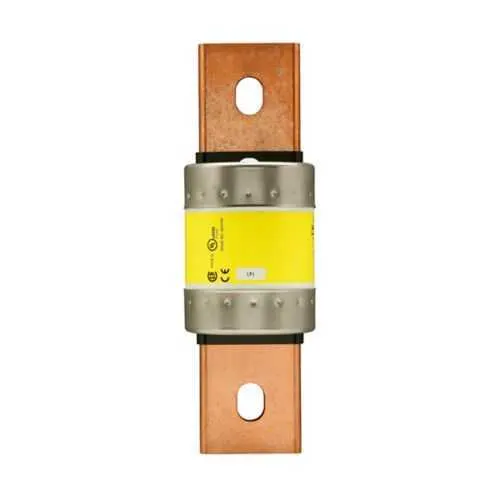
Quick Summary
LPJ-500SP fuse from Eaton provides time-delay, dual-element current-limiting protection for motor circuits and power distribution in industrial control panels. Nuisance trips and unplanned outages slow maintenance and increase downtime costs, especially during motor startups. CE Marked and RoHS compliant ensure global safety and environmental standards, while Class J construction and a high interrupt rating support reliable motor protection at scale. Designed for industrial protection, it features bolted blade end connections and standard packaging to simplify installation, retrofits, and panel design. For engineers evaluating industrial protection fuses and motor protection solutions, LPJ-500SP delivers robust protection with easy field integration and predictable maintenance costs.
Product Information
Extended Description
LPJ-500SP Eaton: Eaton Bussmann Series Class J fuse, LPJ, time-delay, dual-element current limiting fuse, 500 A, non-idicating fuse, interrupting rating of 300 kA at 600 Vac and 100 kA at 300 Vdc
Product Name
Eaton Bussmann series LPJ fuse
Catalog Number
LPJ-500SP
UPC
051712522861
Product Length/Depth
8 in
Product Height
2.5 in
Product Width
2.5 in
Product Weight
2.65 lb
Warranty
Not Applicable
Compliances
CE Marked RoHS Compliant
Amperage Rating
500 A
Interrupt rating
100 kAIC Vdc 300 kAIC at 600 Vac
Response time
10 sec at 500%
Voltage rating
600 Vac, 300 Vdc
Fuse type
Time delay Current-limiting
Number of elements
Dual
Packaging type
Standard
Class
Class J
Connection
Bolted blade end x bolted blade end
Fuse indicator
Non-indicating
Special features
Indicating, High in-rush current motor protection
Bussmann series Class J Low-Peak fuse 70-600A data sheet No. 1007
Bussmann Full Line Catalog
Bussmann Full Line Catalog
RoHS Search Tool
Bussmann series Fuseology
Time-delay dual-element current-limiting design provides protection during motor inrush while enabling fast fault clearing for downstream equipment. Business impact includes reduced nuisance trips, lower wear on contact surfaces, and improved line stability in manufacturing cells. Application: motor drives, pumps, conveyors, and feeders in industrial panels. The 500 A rating supports heavy-load protection, enabling robust protection of MCCs and main feeders with fewer fuse-related interruptions.
Get a Quick Quote for a Eaton LPJ-500SP
Chat with us on WhatsApp - fast responses guaranteed
Need to speak with someone? We'll call you back within 2 hours during business hours
Interested in Eaton LPJ-500SP?
Enquire Now
FAQs
Yes. The LPJ-500SP uses bolted blade end connections and follows the standard Bussmann Class J fuse footprint, enabling drop-in replacement in common MCCs and control panels. With an 8 inch length, 2.5 inch width, 2.5 inch height, and a weight of 2.65 lb, it fits typical enclosure spaces and mounting patterns without special adapters.
The LPJ-500SP is rated for 500 A with a voltage rating of 600 Vac and 300 Vdc. Its interrupt ratings are 300 kAIC at 600 Vac and 100 kAIC at 300 Vdc, with a time-delay response of about 10 seconds at 500% overload, balancing motor inrush tolerance with fast fault clearing.
Best suited for motor protection in industrial control panels, motor drives, pumps, and switchgear feeders, especially where high inrush occurs but reliable fault clearance is required. The dual-element design provides current limiting during faults while accommodating startup surges, reducing nuisance trips and extending equipment life in demanding manufacturing environments.
LPJ-500SP is CE marked and RoHS compliant, aligning with global safety and environmental standards. It belongs to the Class J family, offering compatibility with Bussmann series footprints and standard bolted blade terminations, making it suitable for regulated industrial installations and ensuring traceability in compliance documentation.
Using LPJ-500SP can reduce maintenance costs by lowering nuisance trips and avoiding unnecessary fuse replacements. Its high interrupt rating improves fault tolerance in high-current environments, while straightforward installation minimizes labor time during upgrades. Over the asset lifetime, this translates to improved uptime, predictable maintenance planning, and a favorable return on investment.