
Eaton NCLR600 Fuse - UL Listed 200 kAIC
Part Number: NCLR600
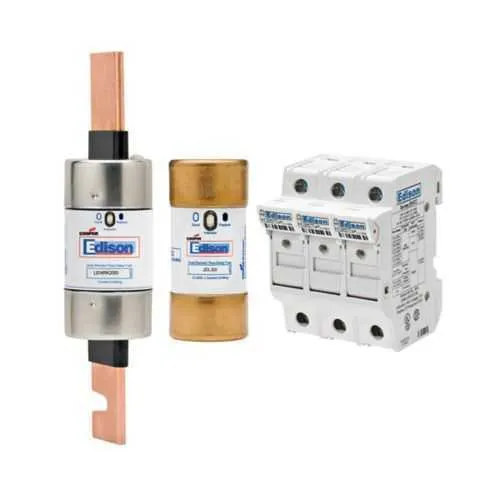
Quick Summary
Eaton Edison NCLR fuse provides fast-acting overcurrent protection for electrical distribution gear. Engineers often struggle to balance uptime with nuisance trips during fault events, especially in demanding industrial environments. This fuse carries CE Marked, UL Listed, and CSA Certified credentials to support safe, globally compliant protection. In addition to robust protection, it delivers reliable performance within standard RK1 fuse blocks and integrates smoothly with Eaton’s Edison protection ecosystem, offering a clear path to increased system reliability and lower total cost of ownership.
Product Information
Extended Description
NCLR600 Eaton: Eaton Edison NCLR fuse, 600 A, -40° to 85°C, Class RK1, Non-indicating, 200 kAIC, Glass melamine tube, Standard, 1, 250 V
Product Name
Eaton Edison NCLR fuse
Catalog Number
NCLR600
UPC
782634407287
Product Length/Depth
10.38 in
Product Height
2.88 in
Product Width
2.88 in
Product Weight
0.001 lb
Warranty
No warranty
Compliances
CE Marked
Certifications
UL Listed CSA Certified
Amperage Rating
600 A
Interrupt rating
200 kAIC
Voltage rating
250 V
Material
Glass melamine tube
Operating Temperature
-40° to 85°C
Packaging type
Standard
Class
Class RK1
Fuse indicator
Non-indicating
Quantity
1
600 A amperage rating with 200 kAIC interrupt capacity delivers dependable fault clearance, reducing damage to downstream equipment and shortening outage durations, which translates to higher plant availability and lower maintenance costs. The 250 V rating supports common industrial low-voltage distributions, while the glass-melamine tube construction provides sturdy performance in harsh environments and simplifies field handling. Class RK1, non-indicating design enables compatible use with standard protectors and straightforward replacement during scheduled maintenance, minimizing downtime and stock variety. Operating from -40° to 85°C, this fuse sustains consistent protection across cold starts and hot-running conditions, supporting reliable protection in factories, warehouses, and data-center peripheral power feeds. Certifications including UL Listed, CSA Certified, and CE Marked reinforce regulatory compliance and supplier qualification, reducing procurement risk and accelerating project approvals. The standard packaging and 1-piece quantity streamline stocking and installation in high-volume projects, while the compact 10.38 in length and 2.88 in width/height fit typical Edison Bussmann fuse blocks without additional adapters. Industry professionals appreciate the proven performance of RK1-class fuses for load feeders and motor circuits, aligning with best practices for protection coordination and safety.
Get a Quick Quote for a Eaton NCLR600
Chat with us on WhatsApp - fast responses guaranteed
Need to speak with someone? We'll call you back within 2 hours during business hours
Interested in Eaton NCLR600?
Enquire Now
FAQs
Install the NCLR600 into RK1-rated fuse holders that match its 600 A and 250 V rating. Ensure the equipment is de-energized, observe proper alignment with the bus and holders, and verify tight, secure contacts before re-energizing. This minimizes contact resistance and reduces the risk of nuisance trips.
The NCLR600 is rated for 600 A continuous amperage, 250 V, with a 200 kAIC interrupt rating, and operates from -40°C to 85°C. It features a glass-melamine tube and Class RK1 designation with a non-indicating fuse indicator.
Yes. The NCLR600 carries CE marking for European compliance and UL Listed plus CSA Certified markings for North American safety and reliability, supporting global procurement and audited supplier programs.
Use NCLR600 for electrical protection in power distribution panels, feeder circuits, and switchgear applications where high fault current protection is required, especially in environments demanding RK1-class protection and reliable coordination.
By delivering fast, reliable fault interruption with a proven RK1 design and certifications, NCLR600 reduces unplanned downtime, lowers maintenance planning complexity, and supports longer equipment life, improving overall plant uptime and TCO.