
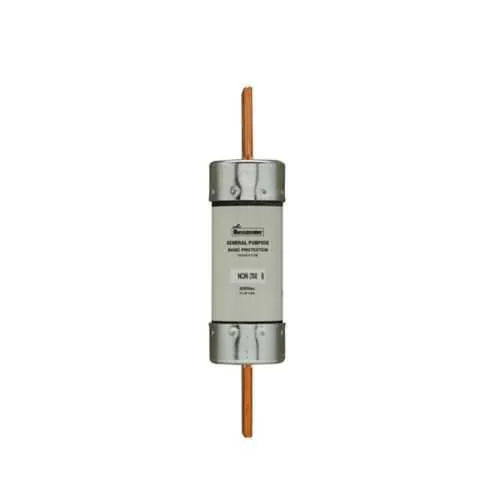
Eaton NON-150 Fuse - Class H, 150 A, 10 kAIC, CE
Part Number: NON-150
Quick Summary
The Eaton NON-150 fuse provides dependable overcurrent protection for general electrical circuits in industrial equipment. Engineers often grapple with nuisance trips and insufficient interrupting capacity when protecting control panels and motor circuits in harsh environments. This device carries CE marking and Class H construction, aligning with European safety standards and robust, non-current-limiting protection. By selecting the NON-150, you gain a reliable, easy-to-source solution that supports standard low-voltage protection strategies while helping you minimize unplanned downtime in manufacturing lines and process controls.
Product Information
Extended Description
NON-150 Eaton: Eaton Bussmann Series Class K5 fuse, NON, general purpose, non-current-limiting fuses, 150 A, one-time fuse, interrupting rating of 10 kA at 250 Vac
Product Name
Eaton Bussmann series NON fuse
Catalog Number
NON-150
UPC
051712101707
Product Length/Depth
1.56 in
Product Height
7.13 in
Product Width
1.56 in
Product Weight
0.8 lb
Warranty
Not Applicable
Compliances
CE Marked
Amperage Rating
150 A
Interrupt rating
10 kAIC at 250 Vac
Voltage rating
250 V
Packaging type
Standard
Class
Class H
Connection
Blade end x blade end
Fuse indicator
Non-indicating
Quantity
1
Special features
Non current limiting
Low Voltage Branch Circuit Fuse Chapter
Low Voltage Branch Circuit Fuse Chapter
RoHS Search Tool
Bussmann series Fuseology
Bussmann series Class H (K) Fuses Data Sheet no. 1030
Feature → Business Impact → Application: The 150 A amperage rating paired with a 10 kAIC interrupt rating at 250 Vac ensures robust protection for general-purpose circuits without overreacting to legitimate inrush, reducing nuisance trips and unplanned shutdowns in control panels. This translates to improved line reliability and longer equipment life in automation racks, motor control centers, and power distribution enclosures. The non-current-limiting design is ideal where controlled inrush is expected, such as soft-start controllers and non-synchronous drives, delivering dependable protection without compromising startup behavior. Blade end x blade end connections provide straightforward, drop-in compatibility with standard fuse holders, enabling faster maintenance and reduced field errors during replacements. The Class H construction and CE compliance support safe, compliant installations across industrial facilities while maintaining a compact footprint in crowded switchgear. Standard packaging and a modest 0.8 lb weight simplify inventory management and shipping.
Get a Quick Quote for a Eaton NON-150
Chat with us on WhatsApp - fast responses guaranteed
Need to speak with someone? We'll call you back within 2 hours during business hours
Interested in Eaton NON-150?
Enquire Now
FAQs
Yes. The NON-150 uses blade end x blade end connections and a standard 1.56 in footprint, allowing quick drop-in replacements in common control panel and machine enclosures without special adapters. This compatibility minimizes downtime during maintenance and reduces the risk of incorrect installation.
The fuse is rated for 150 A with an interrupt rating of 10 kAIC at 250 Vac and a voltage rating of 250 V. These specs enable reliable protection for general-purpose circuits while accommodating typical industrial loads found in control cabinets and distribution boards.
Ideal for general-purpose, non-current-limiting protection in low-voltage branch circuits within control panels, motor starters, and utility feeders. It excels in environments where controlled inrush is expected and full current protection is required without in-rush suppression, balancing reliability with startup performance.
The NON-150 is CE marked, indicating conformity with European safety standards. It is designed as a Class H fuse for general-purpose protection, aligning with common electrical safety practices in global industrial installations.
The NON-150’s straightforward blade-end design reduces field installation errors and replacement time, lowering maintenance labor costs. Its non-current-limiting behavior minimizes nuisance trips in appropriate loads, supporting higher line uptime and improved machine productivity over typical fusing alternatives in low-voltage circuits.