
Eaton RFS15-A Fan speed controller - cULus Listed
Part Number: RFS15-A
Quick Summary
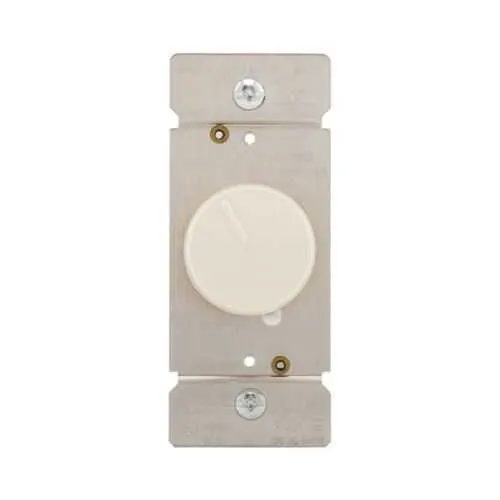
Eaton fan speed controller is designed to regulate fan speed in electrical enclosures and control panels. When panel cooling is mismatched or a power outage interrupts operation, downtime and overheating can spike maintenance costs. This device adds power‑failure memory and a 3‑speed profile to keep equipment within safe temperatures without manual retuning. With a cULus Listed safety certification, indoor‑environment suitability, and a durable polycarbonate housing, it meets stringent industrial standards. The flush mounting and #16 AWG wire leads simplify installation, while 120 V at 60 Hz drives reliable performance for incandescent and halogen cooling applications across automation facilities. Its compact almond finish blends with standard panels and supports easy field adjustment.
Product Information
Extended Description
RFS15-A Eaton: Eaton fan speed controller, Power failure memory, non-preset, 3-Speed, #16 AWG, 1.5A, 120V, Wire lead, Maintained closure, Almond, 60 Hz, Incandescent, halogen, 0° to 40°C, Single-pole, Polycarbonate
Product Name
Eaton fan speed controller
Catalog Number
RFS15-A
UPC
032664699122
Product Length/Depth
2.3 in
Product Height
4.75 in
Product Width
3.08 in
Product Weight
0.001 lb
Certifications
cULus Listed
Amperage Rating
1.5A
Frequency rating
60 Hz
Load type
HAL INC
Voltage rating
120 V
Environmental conditions
Indoor
Allowable wire size
#16 AWG
Mounting method
Flush
Wiring method
Wire lead
Color
Almond
Material
Polycarbonate
Type
3-Speed
Feature → Business Impact → Application: The RFS15‑A provides a 3‑speed control profile with maintained closure and power failure memory, reducing overheating incidents and downtime in critical panels; ideal for electrical control rooms and automation cabinets where reliable cooling sequence is essential. Feature → Application efficiency → The device uses #16 AWG wire leads and a 120 V, 60 Hz supply, enabling straightforward integration into existing panel wiring schemes, accelerating installation in retrofits or new builds. Feature → Compatibility → Flush mounting and polycarbonate construction ensure a durable, space‑saving fit in tight enclosures and control panels with almond color to match standard industrial aesthetics. Feature → Load management → HAL INC load type supports incandescent and halogen lighting or cooling loads, enabling predictable performance and extended equipment life. Feature → Safety & compliance → cULus Listed certification provides safety assurance for indoor industrial environments, facilitating procurement and regulator acceptance. Feature → Reliability → Power‑failure memory helps maintain consistent fan operation after outages, improving uptime and maintenance planning in mission‑critical automation lines.
Get a Quick Quote for a Eaton RFS15-A
Chat with us on WhatsApp - fast responses guaranteed
Need to speak with someone? We'll call you back within 2 hours during business hours
Interested in Eaton RFS15-A?
Enquire Now
FAQs
Yes. The RFS15-A uses a single‑pole, wire lead configuration with #16 AWG conductors and flush mounting, designed to drop into typical 120 V control panel enclosures without custom adapters, accelerating retrofit and new installation timelines.
The unit is rated for 1.5 A at 120 V with a 60 Hz supply and supports HAL INC loads (halogen/incandescent). This makes it suitable for small cooling fans and related incandescent loads in enclosure environments.
Yes. The HAL INC load type covers incandescent and halogen loads, enabling controlled cooling or lighting applications in panel interiors while maintaining predictable dimming/drive behavior.
The RFS15-A is cULus Listed, reflecting compliance with safety standards for indoor industrial use. This designation supports procurement decisions and regulatory alignment for control panels and automation cabinets.
Power‑failure memory preserves the last operating state, reducing startup chatter after outages and minimizing manual retuning. This translates to higher uptime, fewer field adjustments, and lower maintenance costs in mission‑critical automation lines.