
Eaton SPC150240H7P Surge Protection Device - UL 1449
Part Number: SPC150240H7P
Quick Summary
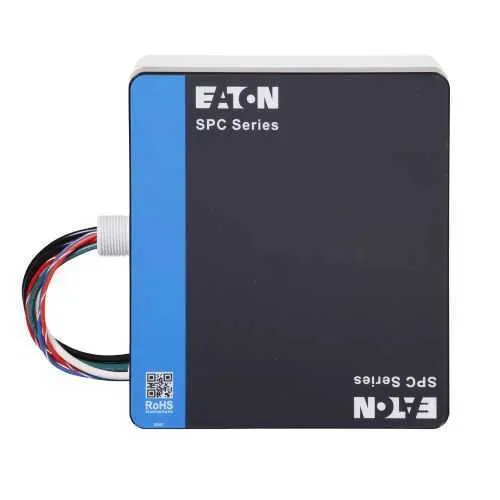
The Eaton SPC150240H7P surge protection device guards 240V delta systems against transient surges in industrial panels. This solution helps address costly downtime and equipment wear caused by voltage spikes. UL 1449 listing and a rugged NEMA 4X enclosure support reliable performance in harsh environments, while a 10-year warranty reinforces long-term protection. With filtering and a Form C relay, the SPC series delivers clear signaling and robust protection, making it a practical choice for panel upgrades and new installation in automation and process lines.
Product Information
Extended Description
SPC150240H7P Eaton: Surge Protection Device, SPC series, 150 kA, 240V High Leg Delta, NEMA 4X, Filtering and Form C relay
Product Name
Eaton SPC series surge protection device
Catalog Number
SPC150240H7P
UPC
786680217968
Product Length/Depth
7.5 in
Product Height
8.5 in
Product Width
3.19 in
Product Weight
4 lb
Warranty
10 year
Certifications
UL 1449
Type
Surge protection device
Special features
Filtering & Form C relay
Voltage rating
240V delta (4W+G)
Enclosure
NEMA 4X
Mounting Method
External side
Interrupt rating
150 kAIC
Series
SPC
High-energy surge capability delivers 150 kAIC protection, reducing the risk of transformer and drive damage and enabling longer equipment life in demanding environments. The 240V delta (4W+G) rating ensures compatibility with delta-connected motors and control circuits, supporting reliable operation of VFDs and PLCs. The NEMA 4X enclosure provides corrosion-resistant, weatherproof protection for outdoor or wash-down areas, minimizing maintenance and replacement costs. Filtering and Form C relay functionality reduce EMI and provide remote alarm signaling, improving maintenance planning and facilitating proactive fault detection. External side mounting simplifies retrofits and space-constrained installations, enabling quick deployment in existing panels and new builds. Overall, the SPC series combines reliability, ease of installation, and clear control signaling to drive uptime and efficiency in industrial automation.
Get a Quick Quote for a Eaton SPC150240H7P
Chat with us on WhatsApp - fast responses guaranteed
Need to speak with someone? We'll call you back within 2 hours during business hours
Interested in Eaton SPC150240H7P?
Enquire Now
FAQs
To install SPC150240H7P, mount the device on an external side, ensuring secure attachment to a compatible panel or enclosure. Verify 240V delta wiring (4W+G) and proper neutral grounding. Connect the line and load terminals per Eaton wiring diagrams, and integrate the Form C relay into your control scheme for remote signaling. Confirm compliance with local electrical codes before energizing.
The SPC150240H7P provides a 150 kAIC interrupt rating, suitable for high-energy transient suppression typical in industrial environments. It is rated for 240V delta systems (4W+G) and includes filtering to suppress EMI. These specifications support reliable protection for drives, PLCs, and sensitive automation equipment while maintaining system integrity during surges.
Yes. The 240V delta rating and high surge capability make the SPC150240H7P well-suited for servo drives and VFDs in manufacturing cells. Its NEMA 4X enclosure supports rugged environments, while the Form C relay provides signaling for control systems. Filtering helps minimize EMI, improving drive performance and reducing interference with nearby equipment.
The SPC150240H7P is UL 1449 listed, indicating compliance with recognized surge protection standards. The device is housed in a NEMA 4X enclosure for indoor and outdoor use, offering robust environmental protection. A 10-year warranty further reinforces trust in long-term performance and protective capability in critical automation applications.
Expect reduced maintenance cycles and lower downtime due to fewer surge-related faults in drives and control gear. The Form C relay enables proactive fault signaling, allowing timely replacements before failures cascade. Over time, this translates to lower repair costs, improved production uptime, and a favorable return on investment in facilities with frequent transient events.