
Norgren 8450300.0000.00000 Brass Angle Seat Valve - 2/2 NC
Part Number: 8450300.0000.00000
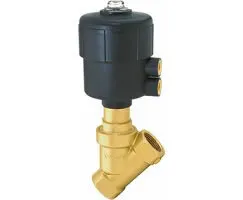
Quick Summary
The Norgren 8450300.0000.00000 Brass Angle Seat Valve delivers reliable 2/2 NC control for gases and liquids in automated systems. Many engineers struggle with leaks, mis-seating, and difficult retrofits when upgrading line valves. Common certifications to verify for line valves include CE marking, IP protection, and SIL readiness to meet safety and reliability requirements. This compact, robust design reduces downtime and maintenance costs while ensuring compatibility with G3/4 ports and PTFE seat seals. In industrial automation, it supports efficient pneumatics and fluid control, improving uptime and installation speed.
Product Information
Extended Description
8450300.0000.00000 Norgren: Interchangeable for NC, NO or double acting functions | Visual position indicator as standard | Dampened closing (closes against flow direction) | Suitable for contaminated flow fluids | Suitable for vacuum up to max. 90% | Reversed flow direction optional
Medium
Gases, Liquids
Operating Temperature
-10 ... 60 °C, 14 ... 140 °F
Operating Pressure
0 ... 10 bar, 0 ... 145 psi
Port Size
G3/4
Function
NC
Valve operation
2/2
Materials - Body
Brass
Materials - Seat Seal
PTFE
Dimensions - Height
28.5 mm
Dimensions - Length
67 mm
Dimensions - Width
44 mm
Weight
1.522 kg
Country of Origin
Germany
Range
84500
Brand
IMI Buschjost
Interchangeable for NC, NO or double acting functions provides design flexibility and reduces spare parts inventory, enabling faster product selection for varying machine cycles. Visual position indicator as standard simplifies commissioning and troubleshooting, cutting non-productive time on installation and line checks. Dampened closing (closes against flow direction) minimizes water hammer and pressure spikes, protecting downstream equipment and extending valve life in high-cycle applications. Suitable for contaminated flow fluids increases reliability in processing lines where particulate matter or viscous fluids are present, reducing maintenance intervals and unscheduled downtime. G3/4 port size with a brass body and PTFE seat seal delivers dependable mechanical integrity across standard plant environments, while the 0–10 bar, -10 to 60 °C envelope supports typical factory air and fluid applications. Interchangeable NC/NO or double-acting options further reduce bolt-on changes during line upgrades, enabling faster retrofit without new valve bodies. The weight and robust construction also support vertical and horizontal installations in compact enclosures, improving machine footprint efficiency.
Get a Quick Quote for a Norgren 8450300.0000.00000
Chat with us on WhatsApp - fast responses guaranteed
Need to speak with someone? We'll call you back within 2 hours during business hours
Interested in Norgren 8450300.0000.00000?
Enquire Now
FAQs
Begin by isolating the line and verifying all fittings are clean and compatible with G3/4 threads. Attach the valve in the proper flow direction, tighten to the specified torque, and ensure the PTFE seat seal seats correctly. Use the visual position indicator during commissioning to confirm correct orientation and function. After installation, perform a leak test and verify the 2/2 NC operation with trial actuations.
The valve supports operating pressures from 0 to 10 bar (0 to 145 psi) and temperatures from -10 to 60 °C (14 to 140 °F). This makes it suitable for a wide range of gases and liquids in standard industrial environments, including pneumatic and low-viscosity fluid circuits.
Yes, the valve is specified to be suitable for vacuum conditions up to 90%. This makes it compatible with vacuum-assisted lines and certain process applications where containment and flow control under reduced pressure are required.
Product documentation does not list specific certifications. For regulated environments, verify CE marking, IP protection ratings, and SIL readiness with the supplier as applicable to your installation and regional requirements. Always align with your plant’s safety and quality standards before deployment.
Dampened closing reduces shock loads and pressure transients when the valve shuts, protecting downstream components and extending seal life. This translates to lower maintenance intervals, reduced wear on actuators, and more stable processes in high-cycle automation where frequent cycling occurs.