
Norgren PQA/182040/40 Cylinder - 40 mm Bore
Part Number: PQA/182040/40
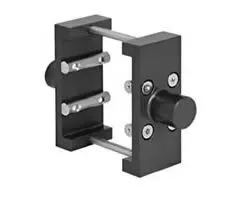
Quick Summary
The PQA/182040/40 cylinder provides precise linear actuation for compact automation systems. Engineers often struggle with mounting flexibility and stroke consistency when space is tight, leading to alignment issues and downtime. In this sector, CE marking, IP ratings, and SIL safety considerations are commonly required to meet machine safety and regulatory standards. By pairing the PQA/182040/40 with familiar Norgren mounting patterns and readily available CAD resources, you can shorten design cycles, simplify procurement, and improve overall system reliability for tighter automation layouts and tooling applications.
Product Information
Cylinder diameter
40 mm
Brand
IMI Norgren
Feature: 40 mm bore provides balanced force and a compact footprint → Benefit: Enables reliable actuation in space-constrained installations while maintaining predictable performance → Application: Ideal for compact pick-and-place and clamp actuations along automated assembly lines. Feature: Adjustable centre trunnion UH style mounting → Benefit: Flexible alignment and straightforward retrofit into existing fixtures → Application: Retrofit projects or new lines where mounting tolerance is critical. Feature: CAD and Datasheet accessibility → Benefit: Accelerates design validation and reduces integration risk → Application: Design engineers can validate fitment and clearance quickly during early-stage development. Feature: Rugged, repeatable actuation design → Benefit: Lower maintenance costs and reduced downtime in high-cycle environments → Application: High-throughput conveyors and robotic tooling with consistent stroke. Feature: Standard Norgren interface compatibility → Benefit: Seamless installation with minimal rework or conversion kits → Application: Retrofit projects across automation cells using established mounting patterns.
Get a Quick Quote for a Norgren PQA/182040/40
Chat with us on WhatsApp - fast responses guaranteed
Need to speak with someone? We'll call you back within 2 hours during business hours
Interested in Norgren PQA/182040/40?
Enquire Now
FAQs
Begin by verifying the existing mounting pattern matches the UH center/trunnion configuration of the PQA/182040/40. Use the adjustable centre trunnion to align the actuator with your tooling and downstream components. Leverage the CAD drawings and the datasheet to confirm clearances, rod end fittings, and mounting screws. This approach minimizes rework, speeds up commissioning, and ensures repeatable actuation across cycles.
The 40 mm bore defines the actuator’s nominal diameter and influences available force and stroke options within the same footprint. Although stroke is not specified here, the bore contributes to repeatable actuation force and speed under standard pneumatic supply. For exact performance curves, consult the Datasheet PDF and CAD resources to match pressure, load, and cycle requirements to your application.
Yes, when paired with appropriate valve sizing and a matched control strategy, a 40 mm bore cylinder can support reliable, high-speed actuation for pick-and-place and clamping tasks. The key is ensuring ample response time, proper cushioning, and alignment. The adjustable UH mounting aids multi-axis positioning, reducing mechanical interference and improving cycle accuracy in tight spaces.
Check for CE conformity and any machine-safety certifications relevant to your region and industry. Also confirm IP ratings for environmental protection and SIL considerations if your safety case requires them. Since the available data does not specify certifications, verify with your distributor or the datasheet to confirm regulatory compliance for your machine.
Downloadable CAD files and the Datasheet PDF provide dimensional data, installation guidance, and performance figures to support design reviews. Leverage these resources to validate fit, plan preventive maintenance, and quantify uptime improvements. The combination of precise actuation, easy mounting, and standard interfaces typically reduces assembly time and lower lifecycle costs in automation cells.