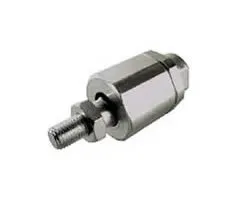
Norgren QM/8160/38 Piston Rod Swivel - 160 mm bore
Part Number: QM/8160/38
Quick Summary
QM/8160/38 Piston Rod Swivel Mounting is a precision mounting solution for pneumatic cylinders in automation systems. Engineers often contend with misalignment and wear from rigid mounts, leading to variability in cycle times and higher maintenance costs. Configurations that carry CE certification and robust IP ratings provide confidence in harsh factory environments, while SIL-capable variants address safety-critical applications where dependable actuation is non-negotiable. This mounting approach also supports installation with standard cylinder interfaces and reduces dynamic loads, contributing to longer actuator life. In practice, this translates to lower total cost of ownership and higher throughput for automation projects across manufacturing, packaging, and industrial equipment integration.
Product Information
Cylinder diameter
160 mm
Brand
IMI Norgren
Feature: Piston Rod Swivel Mounting provides angular misalignment compensation, reducing side loads on the cylinder rod. Business impact: Lower wear, longer actuator life, and fewer unexpected maintenance events. Application: Ideal for 160 mm bore pneumatic cylinders in automated packaging lines, material handling, and assembly cells. Feature: Easy installation with standard interfaces and mounting patterns. Business impact: Shorter commissioning times and fewer installation errors, improving project schedules. Application: Retrofit projects or new builds across factory automation and motion control environments. Feature: Access to CAD data and official datasheets facilitates correct fit and quick design reviews. Impact: Reduces procurement risk, accelerates engineering sign-off, and simplifies vendor collaboration. Application: Engineering teams designing pneumatic systems and validating part compatibility. Feature: Availability of configurations with CE marking and IP protection variants alongside SIL-capable options. Impact: Supports regulatory compliance and safer operation in harsh environments. Application: Industrial automation and robotics where safety and environmental protection matter. Feature: 160 mm bore compatibility and robust mounting pattern support for high-load automation. Impact: Consistent performance under dynamic loads and improved cycle precision. Application: Heavy-duty packaging lines and automotive assembly fixtures.
Get a Quick Quote for a Norgren QM/8160/38
Chat with us on WhatsApp - fast responses guaranteed
Need to speak with someone? We'll call you back within 2 hours during business hours
Interested in Norgren QM/8160/38?
Enquire Now
FAQs
Yes. QM/8160/38 is designed for 160 mm bore cylinders, delivering a swivel mounting that accommodates angular misalignment and reduces side loads on the rod. Verify mounting pattern compatibility via the CAD data and datasheet, and confirm connection interfaces before procurement. CAD files are available to streamline design reviews.
Key considerations include ensuring the mounting surface is flat and parallel to the cylinder axis, using the correct fasteners, and following torque specs in the datasheet. Plan for limited angular tolerance and align during assembly to maximize life. The availability of CAD data simplifies retrofits and reduces installation errors.
This mounting is well-suited for automation lines, packaging equipment, and material handling where robust cylinder actuation and reliable alignment matter. It supports 160 mm bore cylinders commonly used in heavy-duty automated systems, robotics end-effectors, and conveyor tooling, delivering consistent performance in challenging production environments.
Certification availability depends on configuration. Many Norgren assemblies offer CE marking and IP-rated variants, with some options including SIL-capable variants for safety-critical work. Always consult the datasheet or contact sales to confirm the exact certification scope for your order and ensure regulatory compliance in your region.
Benefits include reduced maintenance due to lower misalignment wear, longer actuator life, and shorter commissioning times thanks to CAD data and standard interfaces. These factors translate to lower downtime, faster time-to-market for new lines, and improved total cost of ownership across automation projects.