
Norgren R82R-3GT-RSN Reverse Flow Regulator - Relieving
Part Number: R82R-3GT-RSN
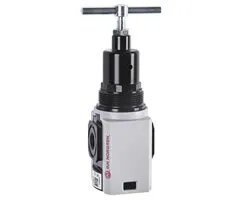
Quick Summary
Norgren R82R-3GT-RSN reverse flow regulator provides precise outlet pressure control for compressed air systems. This design addresses backflow and pressure instability that can cause cycle delays and tool wear in automation environments. Part of the Excelon Plus family, it benefits from a compact, lightweight diecast aluminum body, T-bar adjustment, and a reliable elastomer seal system to maintain consistent regulation in demanding factories. Certification details should be verified in the official datasheets and downloads, but Excelon Plus products are typically aligned with common industrial standards and safety practices; confirm any CE, IP or SIL considerations for your specific installation. For procurement and maintenance teams, the unit’s modularity, standard porting, and documented compatibility translate to faster installation and lower total cost of ownership.
Product Information
Extended Description
R82R-3GT-RSN Norgren: Reduced weight and size | A flexible modular system | T-bar adjusting | Reverse flow
Medium
Compressed air
Operating Temperature
-20 ... 65 °C, -4 ... 149 °F
Port Size
G3/8
Gauge Port
Rc1/8
Adjustment
T-bar
Maximum Inlet Pressure
20 bar
Outlet Pressure Adjustment
0.7 ... 17 bar, 10 ... 247 psi
Relieving / Non Relieving
Relieving
Flow
31 dm3/sec, 66 scfm
Materials - Adjusting Knob
Zinc plated steel
Materials - Body
Diecast aluminium
Materials - Bonnet
Aluminium
Materials - Elastomers
Nitrile rubber
Dimensions - Height
145 mm
Dimensions - Length
47 mm
Dimensions - Width
56 mm
Weight
0.25 kg
Country of Origin
Mexico
Range
R82R
Series
Excelon Plus
Brand
IMI Norgren
Compact, lightweight form factor directly reduces cabinet space requirements and simplifies mounting; with a listed weight of 0.25 kg and compact dimensions, installation time is minimized and service access is improved. The business impact is measurable through faster line commissioning and simplified retrofits in existing pneumatic networks, especially where space is constrained in automation cells and robotic pick-and-place stations. G3/8 port size and Rc1/8 gauge port compatibility enable straightforward integration with standard piping and sensing lines, reducing custom fitting costs and enabling accurate monitoring of regulator performance in real-time. The 0.7 to 17 bar outlet range paired with a maximum 20 bar inlet capacity supports precise control for a variety of tooling and actuators, driving consistent cycle times and reducing over-regulation risks. Flow capacity of 31 dm3/sec (66 scfm) ensures sufficient supply for typical automation workloads while maintaining a compact footprint. A T-bar adjustment provides tactile, repeatable tuning, which speeds setup and reduces drift after maintenance. The relieving design enhances safety by venting excess pressure, improving system stability under load transients and during tool changes in high-demand lines. Excelon Plus’ modular system simplifies upgrades and expansions, enabling stepwise capacity increases without replacing entire panels or piping runs. With nitrile elastomer seals and aluminum/die-cast construction, the regulator delivers durability in challenging environments and moderate temperature ranges (-20 to 65 °C), supporting long service intervals and lower maintenance costs. Compatibility with standard components and the documented installation guides help technicians avoid common misconnection issues and misadjustments, delivering predictable performance across plants and shifts.
Get a Quick Quote for a Norgren R82R-3GT-RSN
Chat with us on WhatsApp - fast responses guaranteed
Need to speak with someone? We'll call you back within 2 hours during business hours
Interested in Norgren R82R-3GT-RSN?
Enquire Now
FAQs
Begin by inspecting the G3/8 port connections and gauge port Rc1/8 for compatibility with your piping and measurement setup. Mount the regulator in a supported orientation to ensure proper venting through the relieving path, then connect supply air within the 20 bar maximum inlet specification and set the outlet using the T-bar adjustment. Verify leak-free connections with a brief pressurization test and reference the installation guide for torque recommendations and sequence to avoid cross-threading or damage to the bonnet and adjusting knob.
The outlet range allows precise tuning to match actuator requirements across cycles, reducing over- or under-pressurization that can affect repeatability. With a maximum inlet of 20 bar and a measured flow of 31 dm3/sec, the regulator can sustain steady pressure for most pneumatic clamps and grippers, delivering consistent actuation times and minimizing tool wear. In automation lines, this translates to improved throughput and reduced process variation when rapid cycling or delicate handling is needed.
Yes. The regulator features a Rc1/8 gauge port that enables pressure sensing or pilot connections without requiring adapters or custom fittings. This compatibility simplifies inline monitoring and control sequencing, aiding predictive maintenance and data-driven calibration. When connecting gauges or sensors, ensure threads seal properly with compatible materials to prevent leakage and verify gauge accuracy against the 0.7–17 bar regulation range.
Certification specifics are not listed in the provided data; verify the exact standards in the official datasheet and brochures linked in the downloads. Look for CE markings, IP ratings, or SIL-related notes in the CAD files, installation guide, and data sheet PDFs to confirm regulatory compliance for your region and application. If in doubt, contact the supplier or the Norgren technical support team for a formal certification statement.
Establish a routine inspection schedule focusing on the T-bar adjustment, seals, and bonnet integrity to prevent drift and leaks. Replace elastomer seals at recommended intervals and verify gauge port connections are tight and free of debris. Leverage the modular Excelon Plus design to upgrade or swap components rather than entire assemblies when expanding lines, which lowers downtime and extends service life while preserving consistent regulation performance.