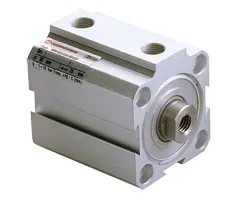
Norgren RM/92040/N4/100 Pneumatic Cylinder - Magnetic
Part Number: RM/92040/N4/100
Quick Summary
Norgren RM/92040/N4/100 is a compact double-acting pneumatic cylinder designed for automated assembly lines. In tight work cells, space constraints and maintenance demands can throttle throughput, which this unit helps mitigate with a short overall length and durable seals. This actuator is compatible with standard mounting patterns and quick-connect fittings, reducing engineering risk during modernization. The magnetised piston enables easy sensor feedback, and the non-corrodible materials reduce downtime and part replacement. Together, these characteristics enable more predictable performance, lower total cost of ownership, and faster time-to-value for compact automation projects. The result is faster time-to-market for automated lines and fewer integration issues during upgrades. Whether you retro-fit a single station or design a new compact cell, this cylinder fits your workflow.
Product Information
Extended Description
RM/92040/N4/100 Norgren: One third the basic length of a corresponding ISO/VDMA model | Low friction, long life seal design | Fully non-corrodible specification | Standard magnetic piston for full control system versatility
Medium
Compressed air
Operating Temperature
-5 ... 80 °C, 23 ... 176 °F
Operating Pressure
1 ... 10 bar, 14 ... 145 psi
Port Size
G1/8
Cylinder diameter
40 mm
Stroke Length
100 mm
Operation
Double acting
Cushioning
No cushioning
Magnetic/Non-magnetic
Magnetic
Theoretical Force
754 N
Materials - Barrel
Anodised aluminium alloy
Materials - Piston Rod
Stainless steel (austenitic)
Range
RM/92000/M
Brand
IMI Norgren
Feature: The RM/92040/N4/100 offers a compact footprint that is roughly one third the length of a typical ISO/VDMA cylinder. This space efficiency translates directly into smaller machine footprints, simpler tube routing, and easier panel mounting in space-constrained automation cells. This actuator is compatible with standard mounting patterns and quick-connect fittings, reducing engineering risk during modernization. Benefit: Low friction, long-life seals reduce wear and leakage, delivering extended service intervals and lower maintenance costs. In high-cycle packaging lines, this means less downtime during peak shifts and lower spare-part consumption. The seal technology also supports predictable performance under varying temperatures and pressures, simplifying diagnostics in field service. Benefit: Fully non-corrodible construction supports durable operation in harsh environments, reducing corrosion-related failures and replacement costs across process lines. The result is lower total cost of ownership and increased system availability. Engineers often specify this type of rugged cylinder for continuous duty applications in challenging climates. Benefit: Magnetic piston enables sensor feedback and easy integration with controllers and monitoring networks, simplifying diagnostics and enabling predictive maintenance. This sensor-ready design accelerates line modernization without adding complexity, and it plays well with common PLC I/O schemes. End users report faster commissioning times and more reliable position sensing when connected to modern condition-monitoring setups. Material selection combines an anodised aluminium barrel with a stainless steel piston rod, delivering rigidity, corrosion resistance, and long-term surface integrity. The industrial-grade construction supports durable operation in automated lines and reduces sporadic replacement needs. Coatings and finish specifications help resist wear in dusty or wet environments, extending service life. Operating range and porting are designed for compatibility with common plant air systems: 1–10 bar, -5 to 80 °C, and G1/8 ports. This reduces the need for bespoke components and speeds up installation across multiple lines and machines. Engineers can confidently scale line automation, knowing the actuator fits standard hardware and piping conventions. Cushioning is not included, so customers can add external end-of-stroke cushions or flow controls to tailor the deceleration profile. This approach aligns with lean manufacturing goals by letting you specify damping only where it is truly needed.
Get a Quick Quote for a Norgren RM/92040/N4/100
Chat with us on WhatsApp - fast responses guaranteed
Need to speak with someone? We'll call you back within 2 hours during business hours
Interested in Norgren RM/92040/N4/100?
Enquire Now
FAQs
Installation in a tight enclosure requires selecting a mounting orientation that aligns the rod travel with the available space and bounding hardware. Use standard Norgren mounting patterns and compatible end fittings; the 40 mm bore and 100 mm stroke keep the footprint minimal, while the G1/8 port simplifies plumbing and leak-tight connections. Ensure clearance for maintenance and the wiring harness.
RM/92040/N4/100 is well suited for high-cycle applications because it combines low-friction seals with a magnetic piston for reliable, repeatable positions. The compact 40 mm bore reduces inertia, enabling faster actuation without sacrificing force (754 N theoretical). In practice, you’ll see lower wear, longer service intervals, and more consistent cycle times on packaging and assembly lines.
Sensor-ready magnetic piston lets you wire position feedback directly into PLCs or condition-monitoring systems. Use G1/8 ports and standard valve interfaces to integrate with existing pneumatic circuits, enabling simple diagnostics and remote monitoring. This reduces commissioning time and supports predictive maintenance without specialized adapters.
Certification considerations include CE conformity and appropriate environmental ratings; while the catalog notes corrosion-resistant construction, verify IP ratings for your plant. For safety-critical lines, pair the cylinder with SIL-capable controllers and interlocks to meet functional safety requirements, using proper safe-by-design practices.
Maintenance and ROI for RM/92040/N4/100 hinge on seal life, wear resistance, and downtime reduction. With low-friction seals and a non-corrodible body, you should expect longer service intervals and fewer replacements in harsh environments, translating to lower maintenance labor and quicker uptime, which compounds to meaningful total cost of ownership reductions across multiple machines.