
IMI Norgren T20C4800 Exhaust Flow Regulator/Silencer - G1/2A
Part Number: T20C4800
Quick Summary
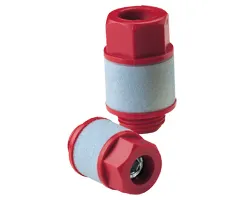
T20C4800 exhaust flow regulator/silencer provides precise exhaust control for compact pneumatic circuits and ready integration with automation hardware. In automation and packaging lines, noisy venting and regulator drift can degrade performance; this unit keeps venting predictable with a captive regulating needle. Certification data is not listed in the provided data; verify CE, SIL or IP ratings on the datasheet. With a PA body and German engineering, it fits neatly into existing T20 systems while delivering robust, maintenance-friendly exhaust control. Compact dimensions, 30 mm height and 50 mm length, support high-density layouts and quick retrofit on existing manifolds.
Product Information
Extended Description
T20C4800 Norgren: Compact, integral flow regulator and silencer units | Captive regulating needle will not blow out when unscrewed | Reduced dimensions
Medium
Compressed air
Operating Temperature
-20 ... 80 °C, -4 ... 176 °F
Operating Pressure
1 ... 10 bar, 15 ... 145 psi
Port Size
G1/2A
Thread
G1/2
Flow
0.58 dm3/sec
Materials - Body
Plastic PA
Dimensions - Height
30 mm
Dimensions - Length
50 mm
Dimensions - Width
30 mm
Weight
0.04 kg
Country of Origin
Germany
Range
T20
Brand
IMI Norgren
Compact, integral flow regulator and silencer reduce footprint while delivering reliable exhaust control. This integration minimizes leak paths and simplifies installation, saving panel space and assembly time in automation lines. Captive regulating needle prevents the needle from disengaging if the unit is unscrewed during servicing, reducing maintenance rework and keeping drift out of critical systems. G1/2A port size and G1/2 thread ensure compatibility with standard pneumatic fittings, enabling rapid retrofits and straightforward integration with existing manifolds. PA body material provides chemical resistance and cost efficiency, supporting durable operation in harsh manufacturing environments. The device’s rated operating range of 1–10 bar and flow of 0.58 dm3/s delivers predictable venting across process lines, lowering energy waste and improving process stability. The design aligns with Norgren’s T20 family for easy lifecycle support and supply chain continuity. Its compact footprint and captive needle design offer practical advantages in field maintenance and downtime reduction.
Get a Quick Quote for a Norgren T20C4800
Chat with us on WhatsApp - fast responses guaranteed
Need to speak with someone? We'll call you back within 2 hours during business hours
Interested in Norgren T20C4800?
Enquire Now
FAQs
To install the T20C4800, ensure your manifold or fittings use standard G1/2A connections, apply appropriate PTFE thread sealant or o-ring seals as specified by your assembly guidelines, and tighten to the recommended torque in the datasheet. Verify alignment to avoid cross-threading, then test for leaks using a low-pressure air test. The captive needle feature helps prevent accidental disassembly during maintenance, reducing rework in tight layouts.
Expect a flow of 0.58 dm3/s at operating pressures between 1 and 10 bar. The unit provides controlled exhaust and noise reduction while maintaining compact dimensions. Suitable for automation and packaging lines, it supports predictable venting and reduces pressure fluctuations that can affect downstream actuators and cylinders.
Yes. The integrated regulator and silencer are designed for compact packaging lines where space is at a premium and quiet operation is beneficial. Its G1/2A connection and PA body support reliable installation on standard pneumatic circuits, while the captive needle helps maintain stable venting during routine servicing in production environments.
Certification data is not listed in the provided product data. For CE, SIL, and IP ratings, refer to the datasheet (PDF) or contact the supplier to confirm compliance before integration into regulated environments. Always verify certification status against your local standards and end-market requirements prior to deployment.
The captive regulating needle design prevents needle loss if the unit is unscrewed during service, reducing maintenance downtime and the risk of recalibration errors. This translates to lower service costs and faster line recovery, especially in high-availability applications where regular exhaust tuning is required for process stability.