
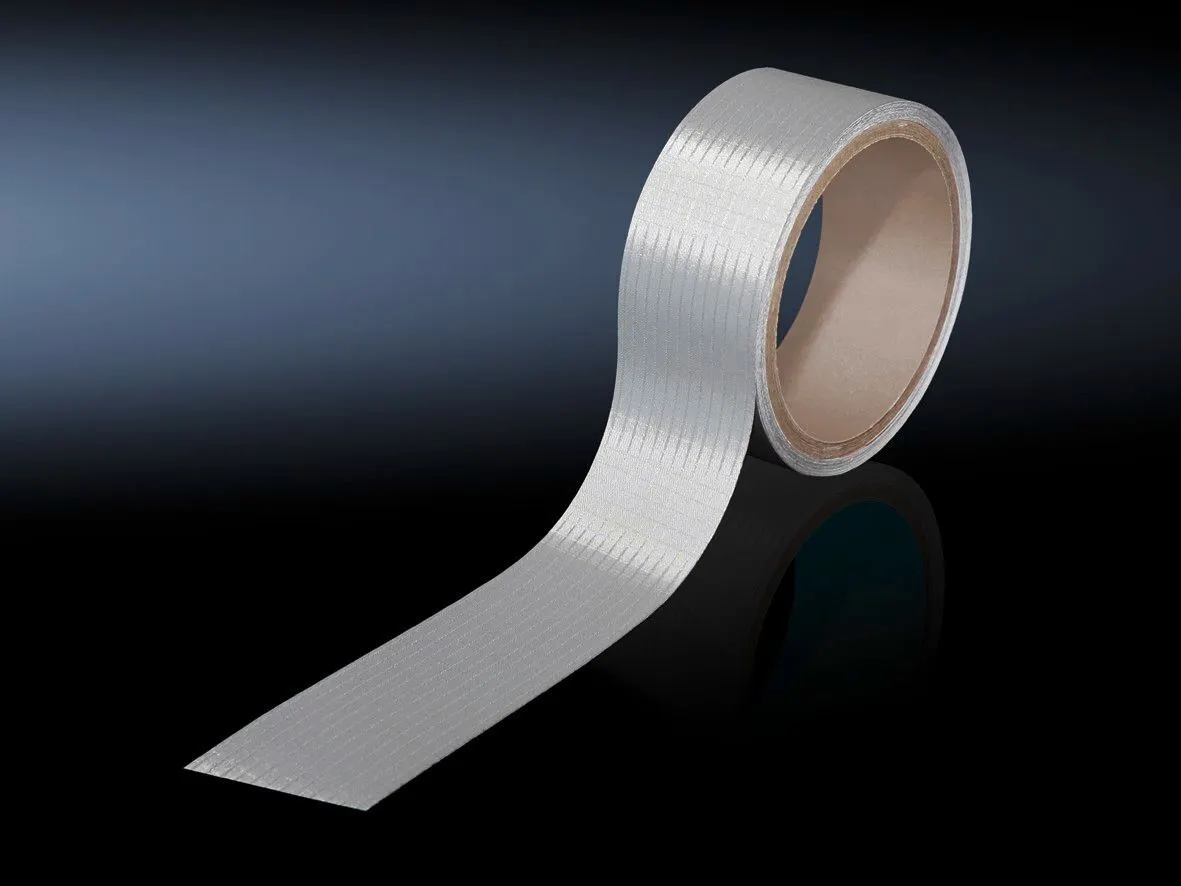
Rittal VX 8800.695 EMC Shielding Seal - 8 m roll
Part Number: 8800695
Quick Summary
VX EMC shielding seal provides EMC-compliant shielding for baying points in enclosure assemblies. Engineers often face EMI leaks at enclosure interfaces that disrupt performance and trigger costly rework. The product aligns with ETIM 9 EC002620 and ECLASS 8.0 27189261, supporting accurate data exchange and regulatory documentation. With an 8 meter roll and a 40 millimeter width, it enables rapid deployment across multiple cabinet bays, while a 0.7 kg per pack weight keeps handling simple for field installers. This combination delivers reliability at scale and reduces lifecycle costs, making it a practical choice for panel builders and system integrators seeking robust EMI protection.
Product Information
Extended Description
8800695 Rittal: VX EMC shielding seal
Article number
VX 8800.695
Product description
For EMC-compliant shielding of the baying point in conjunction with external baying connector.
Supply includes
1 roll = 8 m
Length
8,000 mm
Dimensions
Width: 40 mm | Length: 8,000 mm
Packs of
1 pc(s).
Weight/pack
0.7 kg
Customs tariff number
84841000
EAN
4028177947238
ETIM 9
EC002620
ECLASS 8.0
27189261
Product description
VX EMC shielding seal
Long, continuous coverage is achieved with an 8 m roll that stays intact during installation, while a 40 mm width ensures consistent contact along the baying point. This translates into faster commissioning and less waste on every cabinet run. In practice, technicians can unroll, cut to length, and apply without rework, reducing downtime during panel builds. The EMC shielding seal material is designed for effective containment around external baying connectors, improving EMI performance and minimizing emissions at critical junctions. This directly supports compliance with EMC requirements in modular cabinet systems and reduces risk during audits.
Get a Quick Quote for a Rittal 8800695
Chat with us on WhatsApp - fast responses guaranteed
Need to speak with someone? We'll call you back within 2 hours during business hours
Interested in Rittal 8800695?
Enquire Now
FAQs
Begin with a clean, dry surface at the baying point. Unroll the 8 m roll, cut to the required length to cover the baying interface, and place it along the connector path. Press firmly to ensure consistent contact and seal integrity. Use the 40 mm width to maintain a uniform shield across the baying point and secure with compatible adjacent panels. This approach minimizes EMI leaks and accelerates commissioning.
The VX 8800.695 is designed for EMC shielding at baying points with external baying connectors and uses a 40 mm width suitable for standard interface gaps. While optimized for Rittal systems, its dimensions support compatibility with common baying geometries found in many modular cabinets. Always verify fit against your enclosure’s baying point dimensions and external connector layout.
You can expect improved EMI containment at baying interfaces, reducing emissions and EMI-related interference in connected equipment. The continuous 8 m roll minimizes gaps and seams where leakage could occur, streamlining compliance with EMC requirements and reducing the need for rework during audits or field testing. The result is more predictable performance across cabinet arrays.
The product aligns with ETIM 9 EC002620 and ECLASS 8.0 27189261, supporting consistent data exchange in procurement systems. It carries GTIN and EAN 4028177947238 for traceability. While no CE or SIL/IP ratings are listed in the provided data, the alignment with these classifications helps standardize cataloging, ordering, and interoperability across catalogs and ERP systems.
The 8 m roll length, 40 mm width, and 0.7 kg pack size enable fast, repetitive installation with minimal handling effort, reducing labor time per panel and lowering commissioning costs. By improving EMI containment, it lowers the risk of rework from leakage tests and supports longer-term reliability in enclosures with external baying connectors, delivering measurable lifecycle cost savings over typical protection methods.